Medically reviewed by Dr Ahmed Haq, Medical Director, Cosmedocs Harley StreetGMC 6078057Last reviewed
Harley Street, London
Cosmedocs, 10 Harley Street, London W1G 9PFSpeak with the clinic
+44 20 3733 3227Medically reviewed
Dr Ahmed Haq, GMC 6078057Check the evidence
Verified reviews Real masseter Botox resultsDoctor-led · Harley Street · Since 2007
Masseter Botox London
A quieter jawline. Less clenching. The same face — refined. Doctor-led masseter Botox for jaw slimming, bruxism and TMJ tension.
Our aesthetics is invisible art — bold, natural, always your way.
- 15–20 min
- No downtime
- From £350
- Doctor-led
Real patient · Real timeline
His journey — staged, not stripped
One male patient. Two stages. The same restraint we apply to every face — small, accurate doses that let the masseter soften over time rather than collapse in one go.
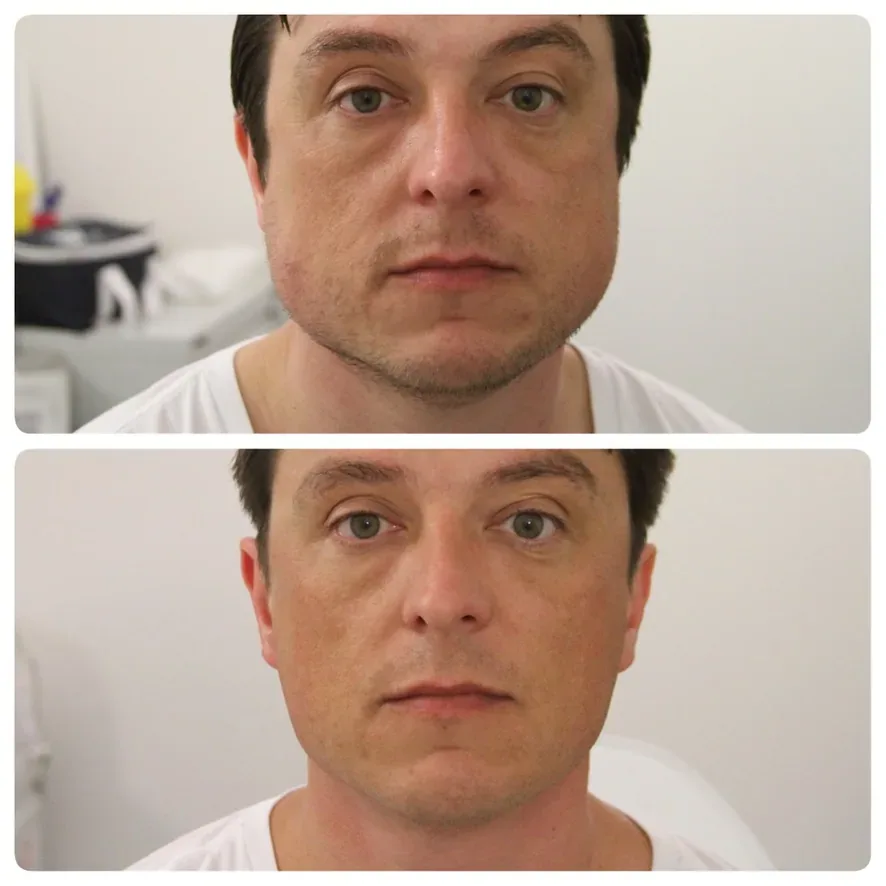
After 2 treatments
Two-session progression
Baseline to the first visible reduction in lower-face width. Expression and natural smile preserved.
1 year · after 3rd session
Cumulative atrophy
A refined, settled jawline — the result of staged maintenance, not a single oversized treatment.
Real Cosmedocs patient. Shared with written consent. Individual results vary. For the full set of female and male masseter cases, view our masseter gallery.
Clinical anatomy
What masseter Botox actually changes
Masseter Botox, also called jaw Botox or jawline slimming Botox, uses botulinum toxin to reduce excessive contraction in the masseter muscle. This is not a filler treatment and it does not carve the jaw bone. It works by calming a powerful chewing muscle so that over time the muscle becomes less bulky.
Dual intent
What masseter Botox treats
Jaw slimming
Softens a square or wide lower face by reducing muscle-driven width at the jaw angle. A more oval, balanced contour — no bone work, no surgery.
Bruxism & TMJ relief
Lowers excessive bite force that drives night-time clenching, jaw fatigue, tension headaches and TMJ strain. The strongest chewing muscle, quieted.
Tooth & enamel protection
Reduced bite force protects fillings, veneers and natural enamel from the chip-and-crack cycles caused by chronic grinding.
Doctor-led dosing
Dose and placement are matched to muscle size, asymmetry and functional strength — not a flat number from a price list.
How it works
Four steps. No drama.
- 01
Doctor assessment
Your doctor palpates the masseter while you clench to map the strongest muscle belly, judge density and check for right-left imbalance.
- 02
Dose planning
Dose is set by muscle volume, gender, bite force, symptoms and whether the aim is slimming, bruxism relief or both — never a flat unit count.
- 03
Precise placement
Small, deep injections into the safe lower body of the masseter, avoiding superficial smile muscles and the parotid region. 15–20 minutes.
- 04
Settle & review
Back to normal life immediately. Tension eases in 1–2 weeks. Slimming appears by weeks 3–12. We review at 4–6 weeks and refine the next session.
Clinical planning
How dose, strength and symmetry shape the result
Good masseter treatment starts with diagnosis: is the jaw wide because of muscle, bone, clenching habit, chin position, or a mixture of all four? The answer decides whether Botox alone is right or whether a wider lower-face plan is safer.
Strength
Large, dense masseters need a different plan from slim patients with mild clenching. Dose is judged by palpable contraction, visible bulge and functional symptoms.
Asymmetry
One side often works harder. Matching both sides with identical units can preserve imbalance, so the stronger side may need a tailored dose.
Face shape
The aim is not to erase the jaw. It is to reduce excess muscle bulk whilst preserving natural structure, expression and a healthy chewing function.
In research and clinical practice, botulinum toxin can reduce bite force and masseter muscle thickness over time. That does not mean every square jaw should be treated. Some patients have strong bone structure, a short chin, dental bite issues or facial volume loss that would make over-relaxation unflattering. A doctor-led consultation separates these causes before treatment.
Decision clarity
Masseter Botox vs jawline filler
Suitability
Who masseter Botox suits
May be suitable
- Wide or square jaw caused by muscle bulk
- Teeth grinding, clenching or jaw ache
- TMJ tension with masseter overactivity
- Asymmetry where one masseter is stronger
- Patients wanting subtle facial narrowing, not a hollow look
May not be suitable
- Jaw width is mostly bone, not muscle
- Pregnancy or breastfeeding
- Active infection at the treatment site
- Relevant neuromuscular conditions
- Expecting instant slimming rather than gradual muscle reduction
Evidence and expectations
What good treatment should feel like
Good masseter Botox is not judged only by a slimmer photograph. Patients often report fewer headaches, reduced morning jaw fatigue, less tooth pressure and a calmer bite. Cosmetically, the change should be progressive enough that people notice you look fresher or less heavy in the lower face, not that a treatment has been done.
Aftercare & recovery
Back to normal life — immediately
First 24–48 hours
Avoid strenuous exercise, rubbing the jaw, lying flat straight after treatment, saunas and heavy alcohol. Avoid gum or excessive chewing for 48 hours. Small bruises are uncommon and short-lived.
First year
Symptom relief begins before visible slimming — clenching usually eases first, then bulk reduces over weeks. Large masseters often need staged treatments in year one. Once settled, maintenance is spaced to your muscle return and aesthetic endpoint.
Pricing
Clear pricing. No add-ons.
Masseter Botox
£350
Includes doctor-led assessment, treatment and review.
How much does masseter Botox cost?
Masseter Botox costs £350 at Cosmedocs.
What affects the price?
Strength, asymmetry and treatment aim affect the dosing plan and suitability, while the published treatment price remains £350.
We work with PrivaDr Ltd, 10 Harley Street, London W1G 9PF for all CQC required treatments.
Common questions
Honest answers
How long does masseter Botox last?
+
Masseter Botox usually lasts 4–6 months. In larger or very active masseter muscles, the first year may need closer maintenance because the muscle is strong and used every day for chewing and clenching. Once cumulative atrophy is achieved, many patients move to two sessions a year, then annual review depending on symptoms and muscle return.
Is masseter Botox for jaw slimming or teeth grinding?
+
It can be both. Cosmetically, it reduces bulky masseter muscle to soften a square lower face. Medically, it reduces excessive bite force, clenching, jaw tension, TMJ strain and bruxism-related headaches. The same muscle is being treated; the treatment plan is adjusted according to whether your main concern is shape, symptoms, or both.
How much does masseter Botox cost at Cosmedocs?
+
Masseter Botox costs £350 at Cosmedocs. Your doctor confirms whether the treatment is suitable after assessing the muscle at rest and during clenching.
What affects the price of masseter Botox?
+
Masseter Botox is priced at £350. The clinical plan still varies with muscle strength, asymmetry and whether the aim is jaw slimming, bruxism relief or both; these factors affect dosing and suitability rather than the published treatment price.
Will it affect chewing or my smile?
+
The aim is partial relaxation, not paralysis. Some patients notice temporary chewing fatigue with tough foods for a few days, especially after their first treatment, but normal eating, speech and expression are preserved when dosing is placed correctly inside the muscle body.
When will I see jaw slimming?
+
Jaw tension may start easing within 7–14 days. Visible slimming is slower because the muscle has to reduce in bulk. Most patients see early contour change by weeks 3–4 and a clearer reduction by weeks 6–12, especially after repeat treatment cycles.
What are the side effects?
+
Common effects are mild tenderness, small bruises or temporary chewing fatigue. Uncommon risks include smile asymmetry, under-treatment, over-softening, or paradoxical bulging if the strongest part of the muscle is missed. This is why Cosmedocs uses doctor-led assessment and conservative anatomical dosing.
See the full gallery
Browse real patient before-and-after photographs from our masseter Botox treatments at Harley Street.
Related reading
Doctor-written guides on jawline shape, bite force and the clinical detail behind masseter Botox.
Jaw Tension With Headaches Or Neck Pain?
Understand the wider picture — how the jaw–head–neck pain cycle is assessed and how treatment is sequenced.
Read article EditorialJawline Tightening After 30
Where masseter Botox fits alongside skin tightening and structural support as the lower face changes.
Read article ClinicalTooth Chipping, Grinding & The Masseter
The medical case for masseter Botox in bruxism — why dentists are now referring patients for it.
Read article ComparisonJaw Filler Results, Explained
When the jaw needs slimming (Botox) vs definition (filler) — and how the two are combined for balance.
Read article TechniqueBotox Placement Guide (London)
Why injection point, depth and dosing matter more than units — applied to the masseter muscle.
Read articleYour consultation begins here
A calmer jaw. A softer lower face. Still completely you. Book a doctor-led assessment for masseter size, bite force, bruxism symptoms and facial balance.
Book at Harley Street