
What the Jawline Actually Represents
The jawline isn't a line. It's a meeting point — where the mandible, masseter muscle, subcutaneous fat, and skin all converge to create what people loosely call "definition." How defined that looks depends on bone density, fat distribution, skin thickness, and genetics. Not Instagram filters. Not contouring tutorials. Not the lighting in your bathroom mirror at 7am.
As you age, bone resorbs. Fat descends. Skin loosens. The angle between jaw and neck softens, jowls form, and the sharp line you had at twenty-two starts to round out. This is not a flaw. It's physics, collagen depletion, and gravity doing their job on schedule. Nobody escapes it. Some people just notice it sooner.
Filler can restore some of what's lost. It can add projection to a recessive jaw angle. It can sharpen a jawline that's been softened by volume shift. But it cannot rebuild bone, tighten skin, or turn a round face into a square one. If anyone tells you otherwise, they're selling something you don't need. And they're probably quite good at it.
Masculine vs Feminine: Same Anatomy, Different Goals
This is where most treatment plans fail — not at the syringe, but at the blueprint. Masculine and feminine jawlines are not the same shape made larger or smaller. They're fundamentally different structures with different aesthetic ideals.
Masculine Jawline
- • Width and angularity at the gonial angle
- • Structural projection — bone-level support
- • Squarer, more defined jaw-to-neck transition
- • Stronger chin projection relative to brow
- • Volume placed deep, along the mandibular border
Feminine Jawline
- • Smoother taper from ear to chin
- • Contour refinement — not angular widening
- • V-line or heart-shaped lower face
- • Softer chin proportioned to mid-face
- • Volume placed for definition, not dominance
Copying a masculine jawline template onto a feminine face produces something that looks heavy, disproportionate, and oddly aggressive. The reverse creates a jaw that's technically smooth but lacks authority. Neither is wrong. Both are wrong when applied to the wrong patient. The injector's job isn't to decide what looks good on Instagram — it's to read the anatomy sitting in front of them and respond to it.
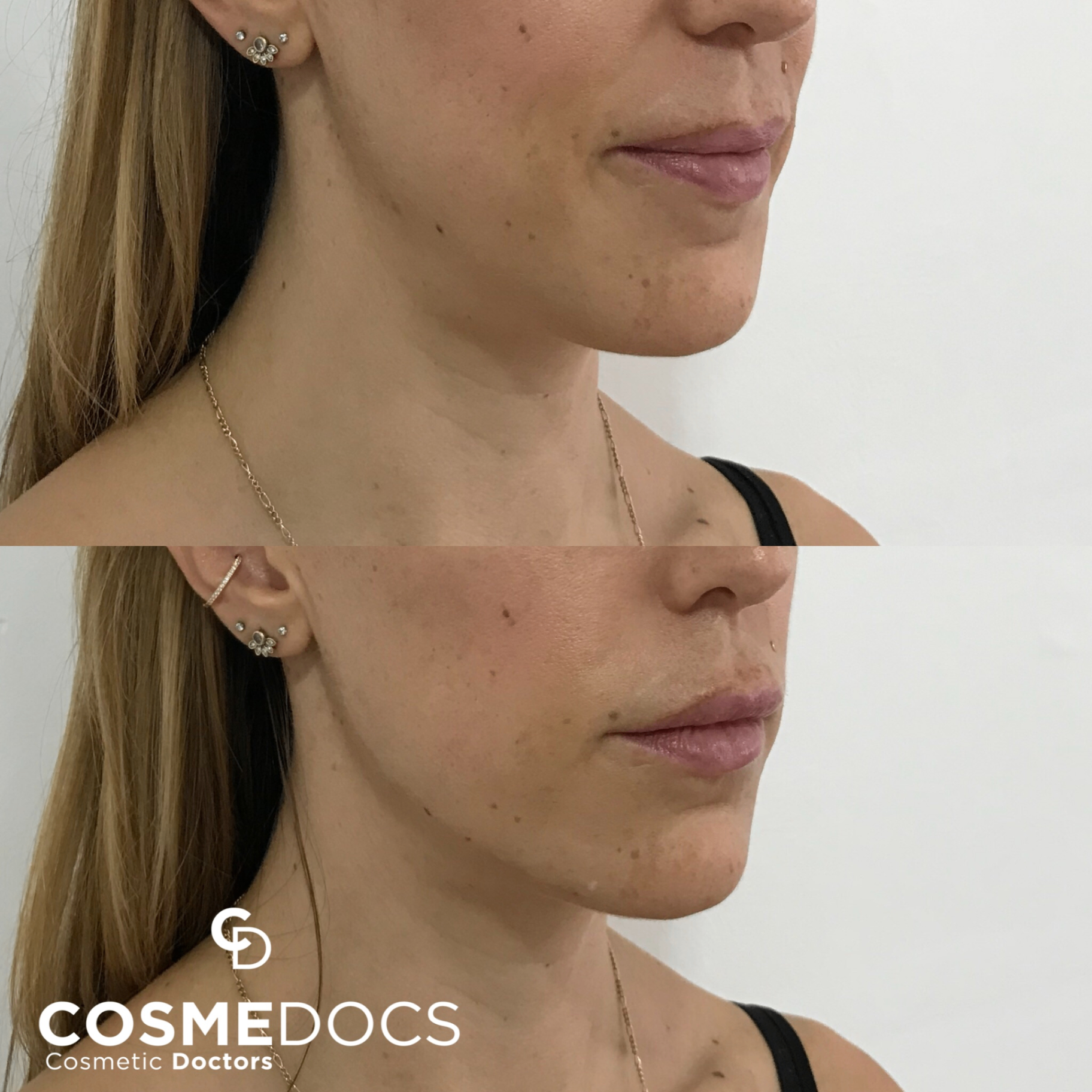

Structure vs Contour: Where Overfilling Begins
Here's the distinction that separates competent jawline work from the Instagram disaster reel: structural augmentation is not the same thing as cosmetic outlining. Most overfilled jawlines happen because someone tried to draw a line where they should have built a foundation.
Structural augmentation
Filler placed deep, against the periosteum (bone surface), to mimic the support that bone would naturally provide. This is what creates genuine definition — the kind you see from the front, the side, and at every angle. It requires anatomical knowledge, patience, and usually less product than people expect.
Cosmetic outlining
Filler placed superficially along the jawline to create a visible edge. This is "line-drawing" — it looks sharp from one angle, odd from another, and puffy within weeks. The jaw has weight behind it because it's bone-supported. When you try to recreate that with a thin line of gel, the result is a jaw that looks sculpted in selfies and swollen in person.
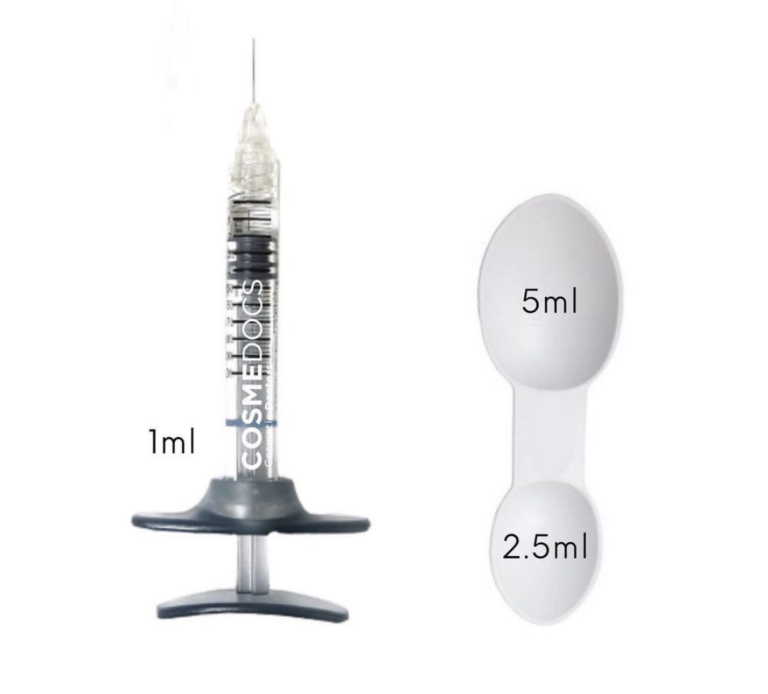
The difference between a good jawline result and a bad one is rarely about how much filler was used. It's about where it went. Deep, structural placement at key points along the mandibular border produces definition that integrates with anatomy. Superficial spreading produces a shelf. One looks like you. The other looks like filler.
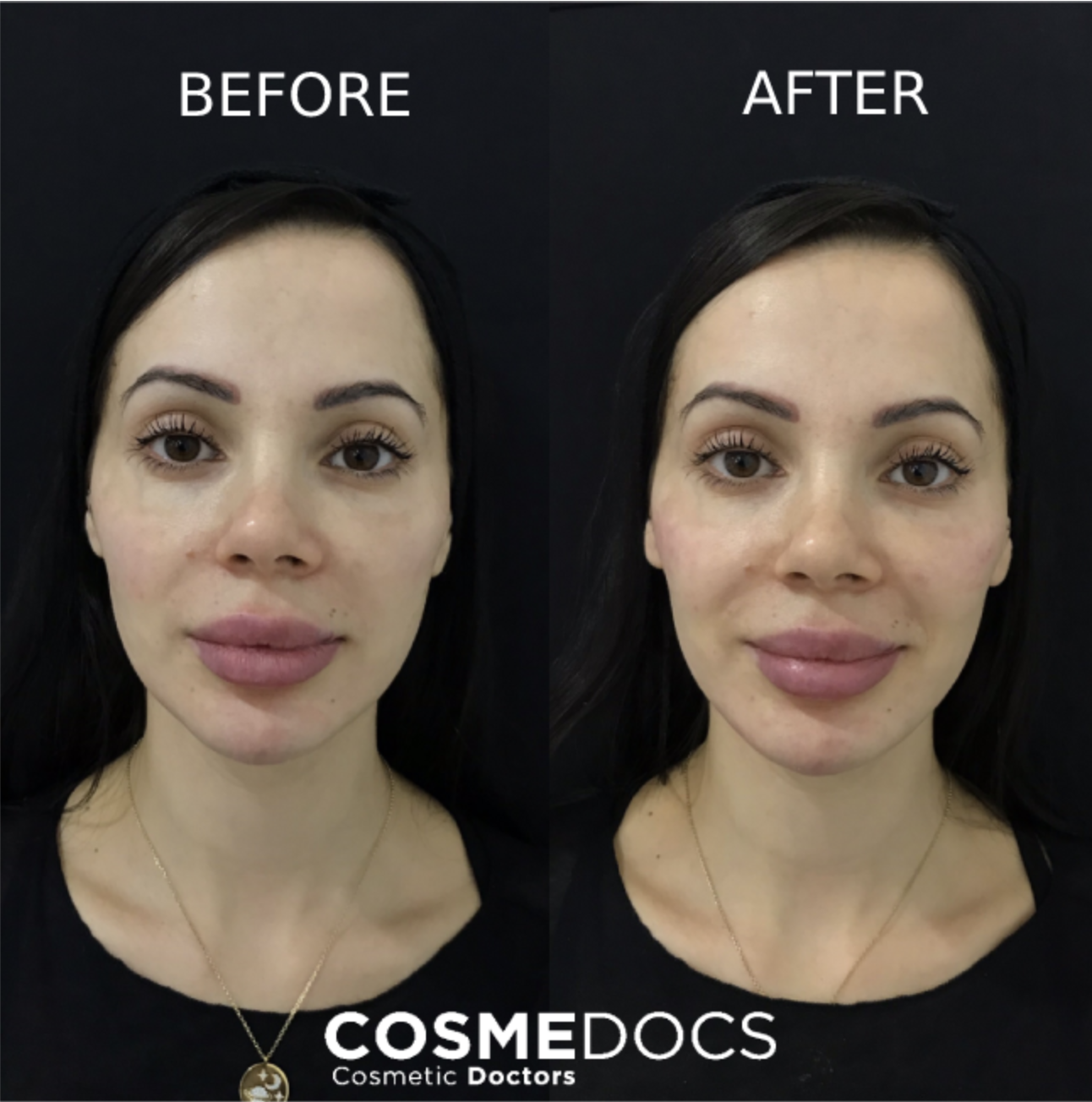
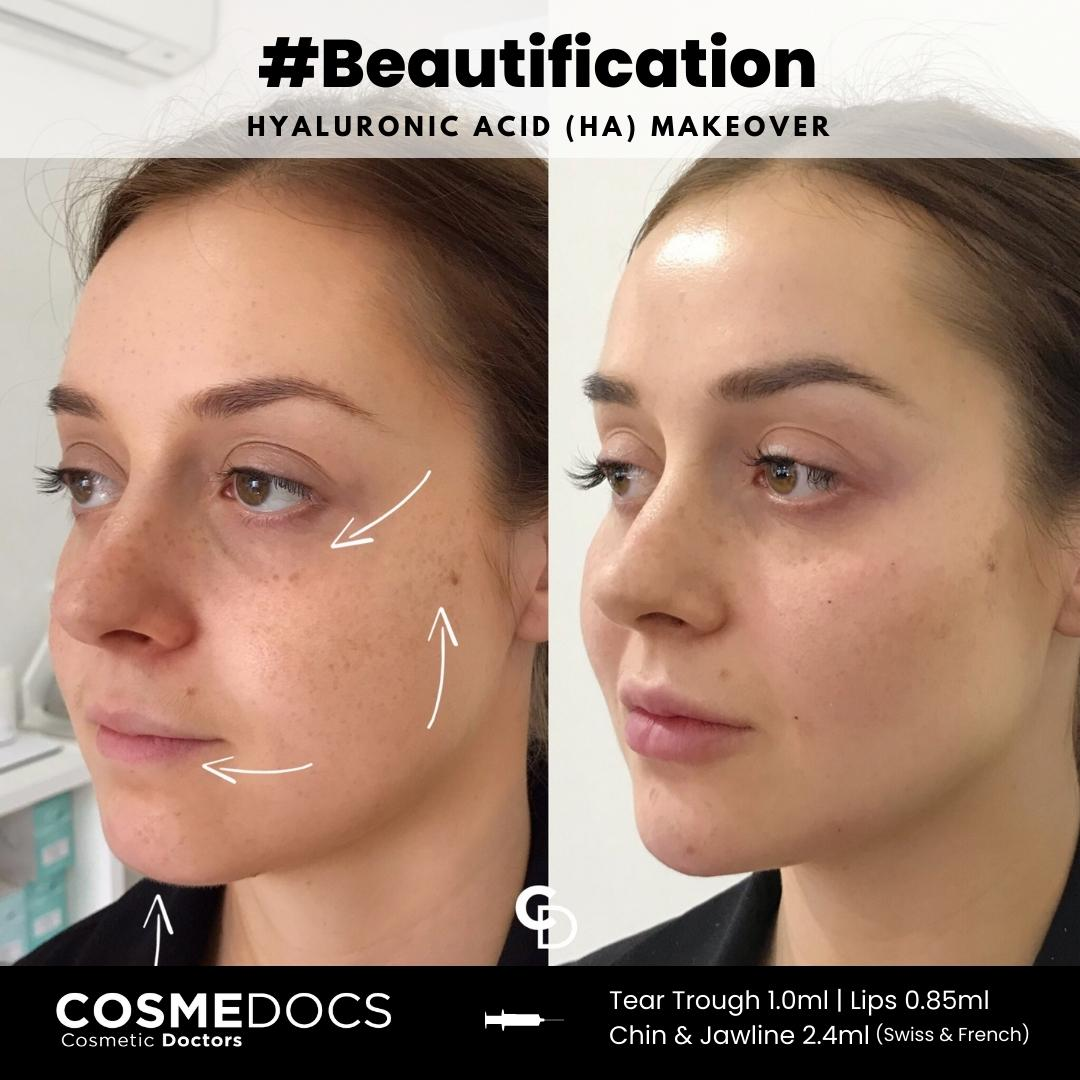
Interpreting Jaw Filler Results: What Natural Outcomes Look Like
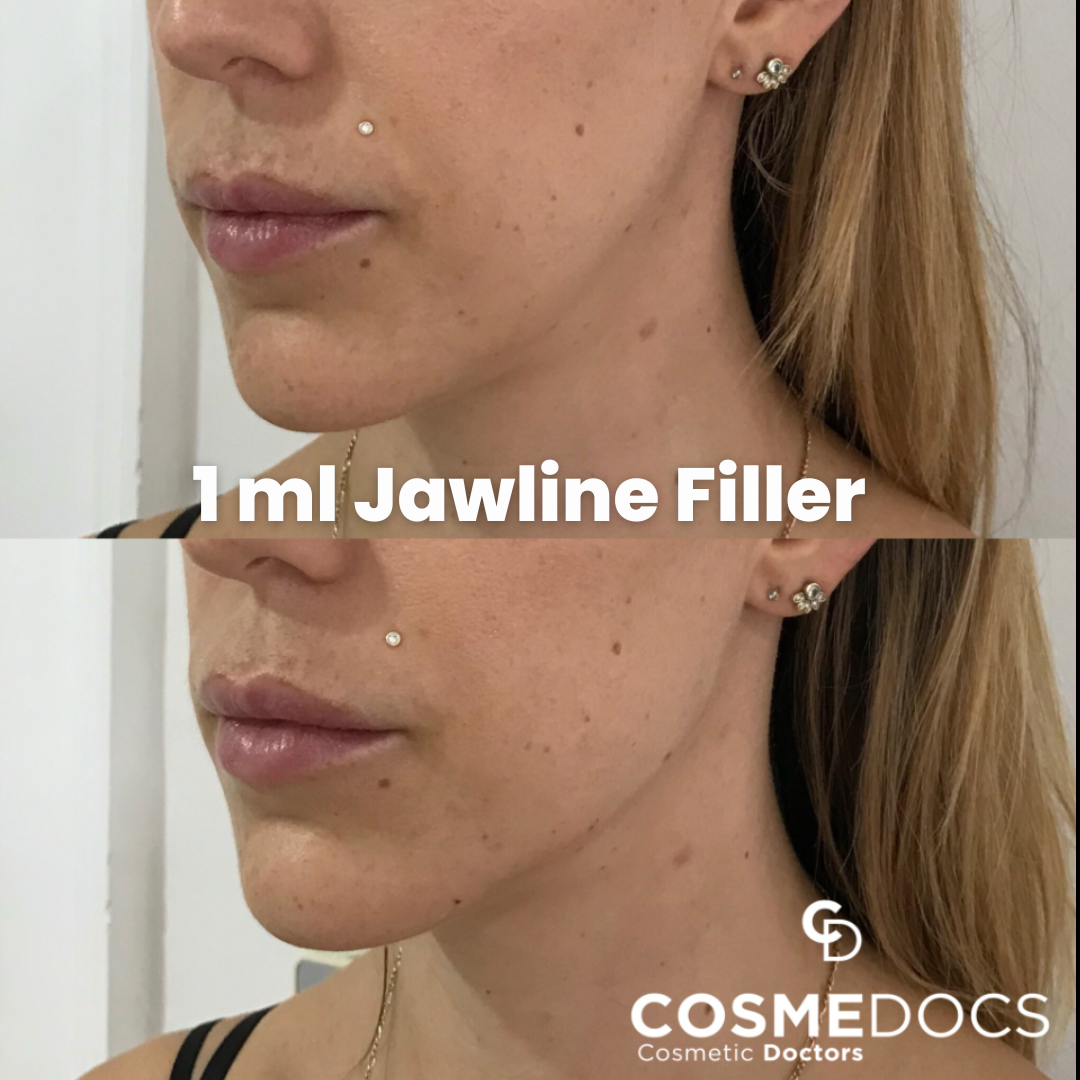
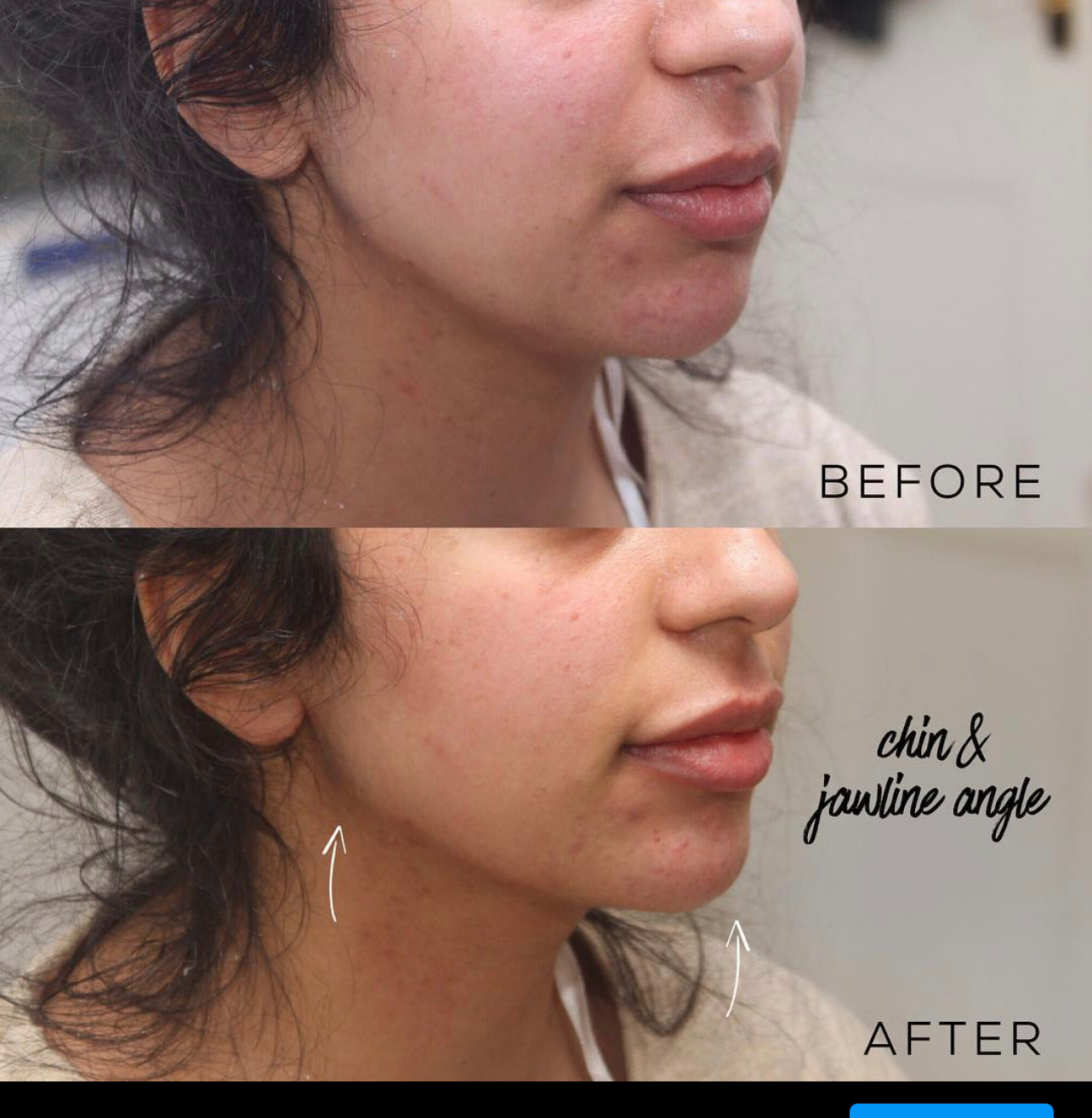
Good jaw filler results are the ones that make people think you've lost weight, had a good holiday, or simply "look well." If someone comments on your jawline specifically, something has either gone very right or very wrong — and the difference is usually about 0.5ml.
Why Overfilled Jawlines Happen
Nobody walks into a clinic asking for an overfilled jaw. It happens incrementally, appointment by appointment, millilitre by millilitre, until one day the mirror shows something the patient didn't intend. Here's how:
Trend pressure
Social media rewards extremes. A subtly improved jawline doesn't generate likes. A dramatically sharp one does. This creates a visual arms race where each appointment tries to outdo the last — and the injector who says "no" loses a customer to the one who says "why not."
Injector inexperience
The jawline is not a beginner area. It requires understanding of mandibular anatomy, facial proportions across gender, product rheology, and — critically — when to refuse. An inexperienced injector fills where the patient points. An experienced one fills where the anatomy needs it. Those are rarely the same place.
Patient-led design
"I want my jawline to look like hers" is the aesthetic equivalent of asking for someone else's skeleton. Bone structure, facial width, skin thickness, and fat distribution all determine what a jawline can and should look like. Reference photos are fine. Blueprints from someone else's anatomy are not.
Poor anatomy assessment
Not every jaw can be sharpened with filler. Some patients have excellent bone structure already — they just have soft tissue changes that need addressing differently. Others have significant skin laxity where adding volume creates bulk without definition. The assessment determines the outcome. Skip it, and you're guessing.
Who Jaw Filler Is Not For
This is the section most clinics leave out, because it's bad for conversion rates. But it's good for trust, which lasts longer than a single booking.
Significant skin laxity. If the jawline has lost definition primarily due to skin sagging rather than volume loss, filler adds weight to tissue that's already struggling to stay taut. The jaw gets heavier, not sharper.
Heavy jowling. Jowls are descended fat pads, not missing volume. Adding filler beneath them can temporarily camouflage the jowl, but it can also make the lower face look wider and fuller — the opposite of definition.
Desire for extreme angles. If the reference image looks like it was rendered in CGI, filler cannot achieve it. Hyaluronic acid is a soft tissue volumiser, not a bone implant. There are physical limits to what gel can do under skin.
Chasing social-media aesthetics. The jawlines that trend online are often the product of filters, lighting, angles, and occasionally significant surgical intervention — not 1ml of filler. If the expectation is a social-media jaw, the conversation should start there, not at the syringe.
Longevity & Maintenance
Jawline filler generally lasts between 12 and 18 months, depending on the product, individual metabolism, lifestyle, and how deep the filler was placed. Deep structural placement tends to last longer than superficial contouring — which is another reason to favour the former.
Maintenance appointments typically require less product than the initial session, because some filler integrates into tissue and provides a residual scaffold. But results are not permanent, and no responsible practitioner will tell you otherwise.
Some patients find that after two or three well-spaced treatments, they need progressively less product to maintain definition. Others metabolise filler faster and require consistent top-ups. This is individual variation, not a flaw in the treatment — and anyone who promises universal longevity is making a claim their syringe can't cash.
Visual Evidence
For a comprehensive collection of clinical photographs, visit our jaw filler before and after results.
For patients who want to explore jawline filler as a treatment option, you can find further details on our jawline filler treatment page.
About the Author
Dr Ahmed Haq is the Medical Director of CosmeDocs, practising from 10 Harley Street since 2007. He specialises in structural facial contouring, non-surgical rhinoplasty, and training physicians at the Harley Street Institute. His approach prioritises anatomical assessment over aesthetic trends — treating what the face needs, not what social media suggests.
Dr Haq specialises in structural jawline augmentation and non-surgical jaw reduction. This article draws on his experience differentiating genuine skeletal enhancement from superficial contouring — and why the distinction determines long-term patient satisfaction.
Experience
17+ years in aesthetic medicine · 1M+ procedures since 2007
Memberships
- ·Royal College of Physicians (RCP)
- ·British Association of Cosmetic Doctors (BACD)
- ·Harley Street Institute — Faculty Trainer
Clinical Specialities