
Lip filler has a reputation problem. Not because the treatment doesn't work — it does, remarkably well — but because the most visible results are usually the worst ones. Nobody photographs a subtle enhancement. Nobody posts "I got 0.5ml and you can barely tell." The feed favours volume, and volume favours regret.
Here's the uncomfortable truth most clinics skip: lip filler is one of the easiest treatments to get wrong and one of the hardest to get right. It can restore hydration, improve border definition, correct asymmetry, and give tired-looking lips a quiet vitality — all without changing who you look like. But that requires understanding the difference between shape and size, between proportion and volume. Most overfilled lips happen when that distinction is ignored. Or worse — when it was never understood in the first place.
Why Lips Are Easy to Overfill
Unlike the chin or jawline — where filler sits against bone like a sensible adult — lip filler goes into soft tissue. There's no rigid scaffold. The lip is essentially a muscular curtain covered in mucosa, and it responds to filler the way a cushion responds to stuffing: it expands in every direction, not just the one you intended.

Then there's swelling. Lips swell disproportionately to the amount injected. A patient who receives 0.5ml may look like they've had twice that for the first 48 hours. This is normal, temporary, and entirely misleading — which is why judging lip filler before day 14 is like reviewing a soufflé before it's set. Patience isn't optional. It's clinical protocol.
The practical consequence: subtlety matters more here than almost anywhere else on the face. A millilitre too much in the chin is forgiven by bone structure. A millilitre too much in the lip is visible from across the room. The margin for error isn't small — it's microscopic. And yet, somehow, "just a bit more" remains the most popular request in aesthetic medicine. Funny, that.
Shape vs Size: The Distinction That Changes Everything
This is the core misunderstanding behind most unsatisfying lip filler results. Patients ask for "bigger lips." What they usually mean — and what they'd actually be happier with — is better-shaped lips. The difference is structural.
Shape is about definition. The cupid's bow — that double curve on the upper lip — is the visual signature of the mouth. The vermilion border, the thin line where lip meets skin, provides framing. The philtral columns, the two ridges running from nose to lip, create the vertical architecture. Good lip filler enhances all of these without inflating anything.
Size is just volume. Add enough product and any lip gets bigger. But bigger without definition is shapeless. The vermilion border disappears. The cupid's bow flattens. The lip starts to project forward — not outward — creating that shelf-like appearance that immediately reads as "filler."
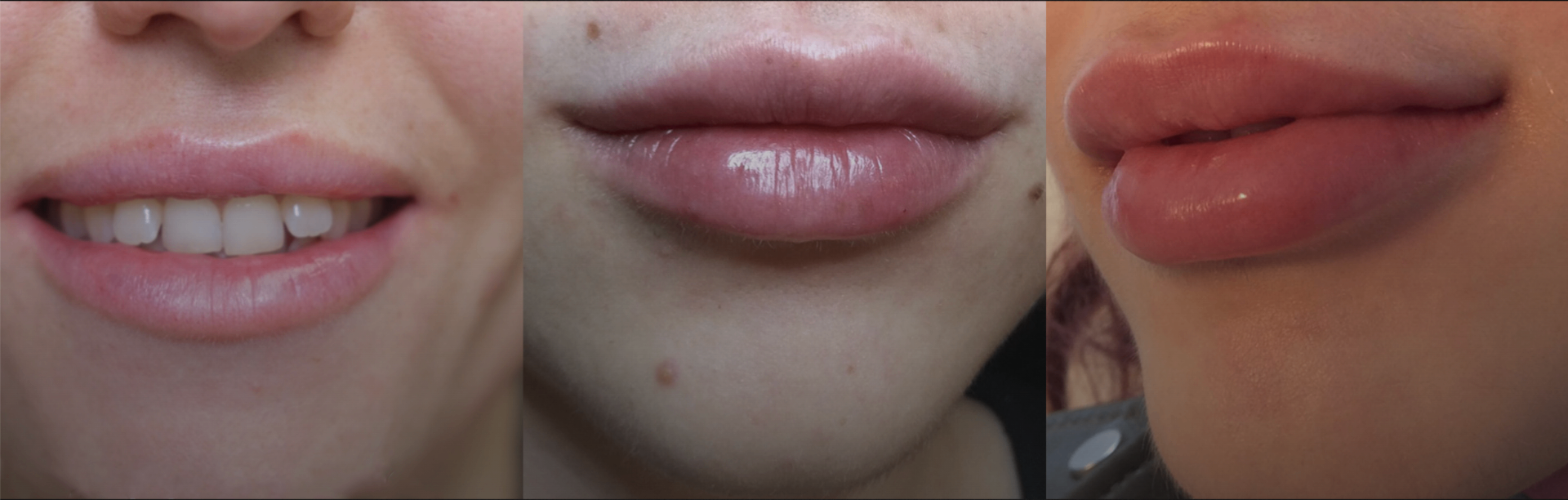
The goal of good lip filler is to make the lip look like a better version of itself — not a different lip entirely. If the cupid's bow is still visible, the border is still defined, and the lip moves naturally when speaking, the treatment has succeeded. If any of those have been lost, too much was placed or it was placed in the wrong plane.
Proportion vs Volume: Why Copying Other Lips Fails
Lip proportion isn't just about the lips. It's about how the lips relate to the nose, the chin, the width of the face, and the dental show. A lip that looks perfectly proportioned on one face will look entirely wrong on another — not because the lip is different, but because the face around it is.
The widely referenced upper-to-lower lip ratio — approximately 1:1.6, with the lower lip slightly fuller — is a useful guide, not a universal rule. Some faces suit equal proportions. Others look best with a fuller upper lip. The ratio that works depends on the individual's bone structure, skin quality, and the natural starting point.
This is why reference images from social media are problematic. That lip exists in the context of a specific face, with a specific nose–chin–jaw relationship. Transplanting it onto a different facial architecture doesn't replicate the result — it creates a mismatch. Good lip filler works with the face, not against it.
Interpreting Lip Filler Results: What Natural Improvement Looks Like
Natural lip filler results share a few consistent characteristics: the lips look hydrated, the borders are defined, the movement is preserved, and nobody comments on your lips specifically — they just think you look well. That's the invisible art.
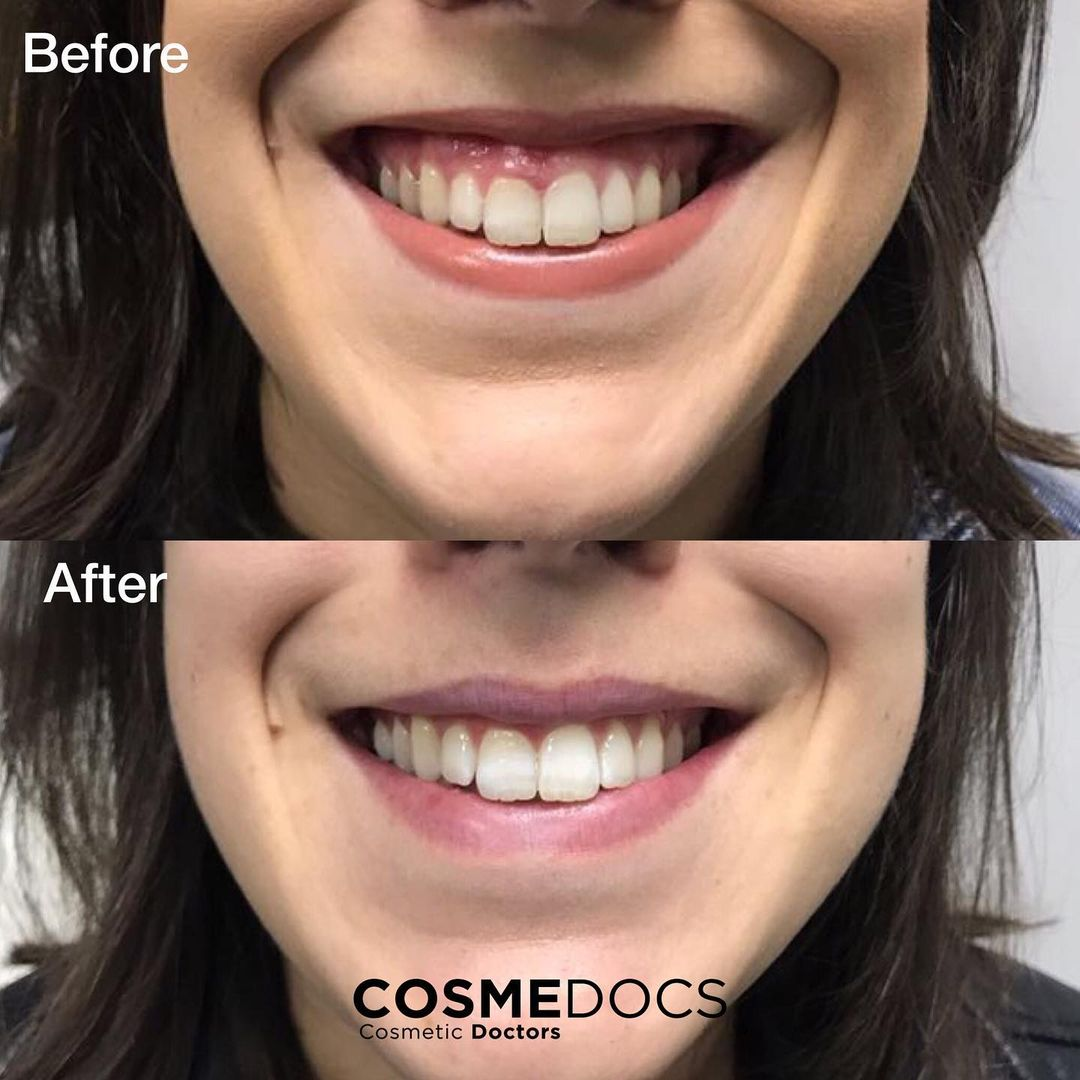
Notice what defines a good result: the lip moves naturally. There's no stiffness, no shelf, no "frozen" quality. The enhancement is visible in photographs when you compare before and after, but invisible in daily life. That's the standard to aim for — not maximum volume, but optimal integration.
When reviewing results — your own or anyone else's — ask three questions: Can you still see the cupid's bow? Does the lip move when the patient speaks or smiles? Does the face look balanced? If the answer to all three is yes, the treatment worked. If the lip is the first thing you notice, restraint was lost somewhere.
Why "Duck Lips" Happen — And It's Rarely the Patient's Fault
The term is reductive and unkind, but the phenomenon is real. Overfilled lips — lips that project forward, lose definition, and appear stiff — happen for predictable, preventable reasons:
Overfilling in a single session. The lip can absorb a finite amount of product before it starts to distort. Placing 2ml in one visit because the patient wants "instant drama" ignores tissue limits. The lip doesn't expand symmetrically — it bulges.
Ignoring anatomy. Every lip has a natural architecture — dry vs wet vermilion, the white roll, the oblique band. Injecting without respecting these structures creates volume in the wrong compartments, and the lip loses its natural landmarks.
Trend-driven requests. "I want lips like [person on Instagram]" is the sentence that precedes most unsatisfying results. The request is impossible — those lips belong to a different face — and attempting it leads to volume chasing a shape that doesn't exist in the patient's anatomy.
Short-term thinking. Repeat treatments without reassessing residual filler. Hyaluronic acid doesn't disappear entirely between sessions. Topping up without accounting for what remains is how subtle enhancement becomes gradual overcorrection — often without the patient or the injector noticing until it's too late.
The common thread: in every case, volume was prioritised over anatomy. The solution isn't to avoid lip filler — it's to choose an injector who understands that "less" is not a compromise. It's the goal.
Who Lip Filler Is Not Suitable For
Lip filler is remarkably versatile, but it is not universally appropriate. Knowing when it's not the right treatment is as important as knowing when it is — and more important than most clinics let on.
Desire for dramatic volume — if the goal is a significantly larger lip, filler can only do so much within safe anatomical limits. Beyond that, the lip distorts rather than enhances. Surgical lip augmentation may be more appropriate for patients wanting permanent, substantial change.
Poor tissue quality — very thin lip tissue, significant perioral lines, or smoker's lines around the mouth may mean filler alone won't achieve the desired result. Skin quality treatments may need to come first.
Expectation mismatch — patients who bring reference images of lips that don't correspond to their facial structure, skin type, or natural lip anatomy. Filler enhances what exists — it doesn't build from scratch.
Active cold sores or infections — treatment should be postponed until the area has fully healed. Injecting into compromised tissue increases complication risk.
A consultation exists to work through all of this. If you leave without a treatment plan, that isn't a failure — it's the system working as it should. The right patient, the right treatment, at the right time.
Longevity, Swelling & Maintenance: What to Realistically Expect
Lip filler generally lasts between 6 and 12 months. The lips are one of the most dynamic areas of the face — speaking, eating, expressing — so filler breaks down faster here than in more static regions like the chin or cheeks. That's normal, not a failure.
Swelling deserves its own paragraph because it causes more unnecessary panic than any other aspect of the treatment. Day 1–3: expect the lips to look fuller than intended. This is oedema, not your final result. Day 5–7: swelling resolves significantly. Day 14: what you see is what you got. Judging lip filler before two weeks is premature and often leads to unnecessary correction or top-up requests that create the very overfilling the patient was trying to avoid.
Maintenance should be approached as reassessment, not automatic replenishment. Each visit should start with an evaluation of what remains, what has changed, and whether more product is actually needed — or whether the lips have settled into a shape the patient is happy with. Sometimes the best maintenance appointment is the one where nothing is injected.
Related Reading
Lip projection is influenced by the structures around it. For an explanation of how chin balance affects lip projection, including profile harmony and why lower face treatments interact.
Visual Evidence
For a comprehensive collection of clinical photographs, visit our lip filler before and after results.
For patients who want to explore lip filler as a treatment option, you can find further details on our lip filler treatment page.
Frequently Asked Questions
Why do some lip fillers look unnatural?
Unnatural results are typically caused by overfilling, ignoring natural lip anatomy, or prioritising volume over shape. When filler is placed without respecting the vermilion border, cupid's bow, and upper-to-lower lip ratio, the result looks artificial regardless of how little product is used.
What is the difference between lip shape and lip size?
Shape refers to contour, definition, and proportional relationship — the cupid's bow, vermilion border, and upper-to-lower balance. Size is simply volume. Good lip filler improves shape; poor results only increase size.
How long does lip filler last?
Generally 6 to 12 months, depending on the product, individual metabolism, and how dynamic the lips are. The lips break down filler faster than more static areas like the chin or cheeks.
Can lip filler look natural?
Yes, when placed with restraint and anatomical awareness. Natural lip filler enhances what already exists — improving hydration, defining borders, and correcting minor asymmetry — rather than creating an entirely new shape. The best results are the ones nobody notices.
How much lip filler do I need?
Most patients achieve a natural result with 0.5–1ml. The amount depends on the starting lip volume, tissue quality, and desired outcome. A consultation determines the appropriate volume — more is not always better, and in the lips, it's often worse.
About the Author
Dr Hena Haq is an Aesthetic Practitioner and Programme Director at CosmeDocs. With an extensive GP background, she brings a holistic, patient-first approach to aesthetic medicine. She leads training programmes for medical professionals and believes that the best results are the ones nobody can identify — quiet improvements that let the patient look like themselves, only better.
Dr Hena's approach to lip augmentation reflects her holistic GP training — assessing the full face, not just the lips. This article captures her philosophy: that natural outcomes begin with honest conversations about proportion, not volume.
Experience
Extensive GP background · Holistic aesthetic practice
Memberships
- ·Royal College of General Practitioners (RCGP)
- ·Harley Street Institute — Fellowship Graduate
- ·British Association of Cosmetic Doctors (BACD)
Clinical Specialities