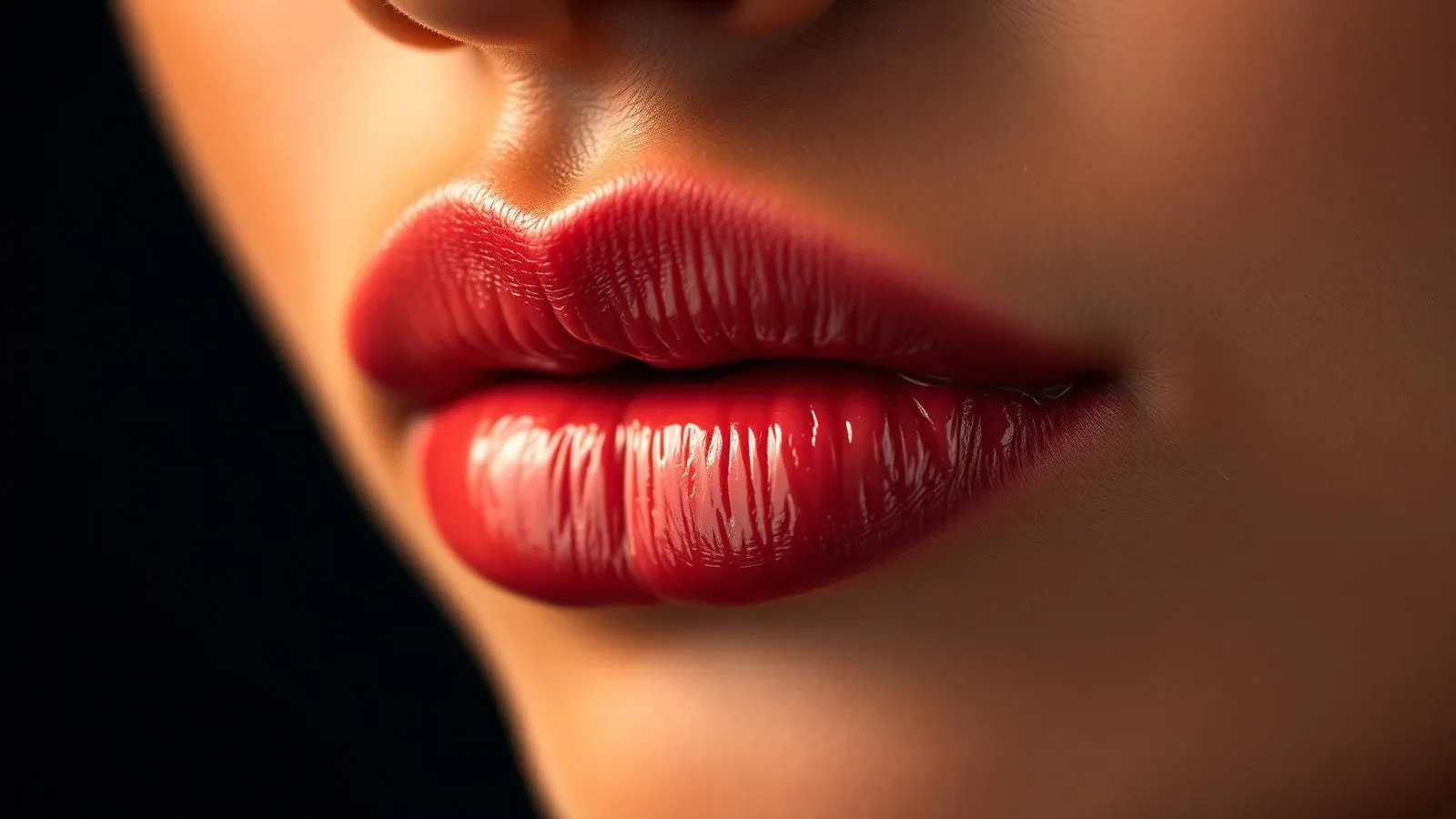
Everyone has had dry lips. Very few people understand why. The reflex is to blame weather, dehydration, or the wrong balm — and while all three matter, they aren't the reason your lips crack when the skin two centimetres away doesn't. That reason is anatomical, and once you understand it, most lip problems make sense.
The vermilion — the red part of the lip — is one of the most barrier-poor surfaces on the entire body. It sits between the tough keratinised skin of the face and the moist mucosa of the mouth, and it inherits the weaknesses of both. That's the whole story in one sentence. Everything below is the detail.
Why Lips Are Different: The Very Thin Stratum Corneum
The stratum corneum is the outermost layer of the epidermis — flattened, dead keratinocytes cemented together by lipids. On the cheek it's around 15–20 cell layers thick. On the vermilion of the lip it is only 3–5 cell layers thick, and the lipid mortar between those cells is sparse. That single anatomical fact drives almost every lip complaint we see in clinic.
Add to that: the lip has no sebaceous glands on the vermilion, no sweat glands, no hair follicles, and no melanocytes producing meaningful pigment protection. It is a thin, dry, unarmoured surface — held together mostly by the underlying orbicularis oris muscle and a rich vascular bed that gives it its colour.
Clinical Note
Transepidermal water loss (TEWL) on the vermilion is roughly three to ten times higher than on adjacent facial skin. That is the mechanical reason a moisturised face can still sit above cracked lips.
Cheilitis: The Medical Term for Angry Lips
Cheilitis simply means inflammation of the lips. It's a descriptive term, not a diagnosis — the job is always to work out which type. The StatPearls chapter on cheilitis (a peer-reviewed reference used by clinicians worldwide) categorises it into distinct patterns, each with a different cause and a different fix.
The Main Types — and What Actually Causes Them
Irritant Contact Cheilitis
The most common presentation. Chronic lip licking, harsh toothpaste (sodium lauryl sulphate, cinnamates), cold dry air, wind, and repeated wiping. Saliva delivers amylase and lipase directly onto the barrier and pulls water out as it evaporates — a self-perpetuating cycle. Children and habitual lip-lickers are the classic patients.
Allergic Contact Cheilitis
A true delayed-type hypersensitivity reaction. Common culprits: nickel (from instruments or jewellery held to the mouth), fragrances, propolis, lanolin, some lipsticks and — surprisingly often — the flavouring in toothpaste. Presents as itchy, scaly, sometimes vesicular lips that persist despite balm.
Angular Cheilitis (Perlèche)
Fissuring and inflammation at the corners of the mouth, where saliva pools. Nearly always mixed infection — Candida albicans plus Staphylococcus aureus — often on a background of iron, B12 or folate deficiency, ill-fitting dentures, or over-closure of the bite from tooth loss. Treated with an antifungal-steroid combination and correction of the underlying driver.
Actinic Cheilitis
Chronic UV damage, almost exclusively on the lower lip. Presents as persistent scaling, blurred vermilion border, and pale atrophic patches. This is pre-malignant. Progression to lip squamous cell carcinoma is well documented and any non-healing lesion should be biopsied. SPF lip protection is not optional for outdoor workers or fair-skinned patients.
Exfoliative Cheilitis
Continuous cycle of scale and crust on the vermilion, often in young adults with a habit of picking or biting the peeling skin. Frequently associated with anxiety, and the treatment is as behavioural as it is topical.
Drug-Induced Cheilitis
Oral isotretinoin (Roaccutane) is the textbook cause — dry, cracked lips affect nearly every patient on treatment. Other drugs: retinoids, chemotherapy agents, some antihypertensives. Managed with heavy occlusive balms throughout the course.
Everyday Aggravators Most People Don't Suspect
- —Menthol, camphor and phenol balms. They feel cooling. They also strip lipids and cause rebound dryness — the reason "medicated" balms are often used compulsively.
- —Toothpaste flavouring. Cinnamon, mint and SLS foaming agents are frequent contact triggers around the lip line.
- —Mouth breathing. Overnight airflow across the lips accelerates evaporation. Common in patients with allergic rhinitis or a deviated septum.
- —Hot drinks and citrus. Repeated thermal and acid insult on an already-thin barrier.
- —Low humidity indoors. Central heating in winter and air conditioning in summer both push ambient humidity below 30%, which the lip barrier cannot tolerate.
How To Restore The Lip Barrier — Properly
The principle is simple: stop stripping what's left, then occlude what's there so the skin underneath can rebuild. Because the lip has almost no natural oil production, occlusion is the single most important step.
- 01Remove the trigger first. Change toothpaste to a fluoride-only, SLS-free, unflavoured formula. Stop lip licking (a physical reminder — a plain balm applied hourly — helps break the habit). Retire menthol and camphor balms.
- 02Occlude with something plain. Petrolatum (Vaseline), lanolin (if not allergic), or a ceramide-based ointment. Apply thickly, especially overnight. Ingredient list should be short and boring.
- 03Sun protection every morning. A mineral SPF 30+ lip balm — reapplied like any other sunscreen. This is the only intervention proven to prevent progression of actinic cheilitis.
- 04Treat infection when present. Angular cheilitis usually needs a topical antifungal (miconazole 2%) with a mild steroid (hydrocortisone 1%) for 7–14 days, plus correction of any deficiency or bite issue.
- 05Investigate what won't settle. Persistent scale, a fixed white patch, a fissure that keeps returning, or asymmetry of the lower lip should be seen by a doctor — not layered with more balm.
When Dry Lips Aren't Just Dry Lips
Most lip complaints are barrier problems and resolve within a fortnight of doing the boring things above. The ones that don't are worth taking seriously. Any lip lesion persisting beyond three weeks — particularly on the lower lip in a fair-skinned or sun-exposed patient — needs clinical assessment. Recurrent angular cracks warrant blood tests for iron, ferritin, B12 and folate. And any bleeding, ulcerated or indurated area should be biopsied without delay.
The lip is a small structure that carries a large amount of information about the body. It rewards attention. It doesn't reward stubbornness.
Clinical Reference
Lugović-Mihić L, Pilipović K, Crnarić I, Šitum M, Duvančić T. Cheilitis. StatPearls Publishing. Available from the National Center for Biotechnology Information: ncbi.nlm.nih.gov/books/NBK507900. Reviewed by Dr Ahmed Haq, GMC-registered aesthetic doctor and Medical Director, Cosmedocs Harley Street.
Your consultation begins here
Persistent lip issues that balm won't fix?
Our Harley Street doctors assess and treat cheilitis, chronic dryness, and pre-malignant lip changes — with prescription-grade care where needed. Our aesthetics is invisible art.
Book a Consultation