Medically reviewed by Dr Ahmed Haq, Medical Director, Cosmedocs Harley StreetGMC 6078057Last reviewed
Forehead Filler London
Forehead filler in London smoothing congenital hollows, bony irregularities and post-traumatic indentations — using high-viscosity, high-G' hyaluronic acid delivered through a blunt micro-cannula by GMC-registered doctors.
The forehead is one of the most defining features of the upper face — and one of the most unforgiving. Because the skin is thin and the soft-tissue envelope minimal, even small indentations, bony depressions or asymmetries cast visible shadows under directional light. Patients often describe a sense that their forehead looks "tired", "uneven", or "dented" without being able to pinpoint why.
Forehead filler is a precision contouring treatment that uses a high-viscosity, high-G' hyaluronic acid placed via a blunt 22G or 25G micro-cannula into the supraperiosteal plane. The aim is not volume for its own sake — it is restoration of a smooth, convex frontal contour that catches light evenly. Quiet. Architectural. Invisible to anyone who hasn't seen the before.
What Forehead Filler Corrects
The Anatomy: Why the Forehead Is Different
The frontal region sits over the frontal bone — a curved bony shield with two paired sinuses behind the brow ridges. Covering it are five anatomical layers: skin, subcutaneous fat, the frontalis muscle, the galea aponeurotica, and the loose areolar layer immediately above the periosteum. The frontalis is unusual: it has no bony origin at its lower end, and inserts directly into the dermis at the brow — every contraction translates into skin movement.
Three artery systems supply the area: the supratrochlear artery medially, the supraorbital artery just lateral to it, and the frontal branch of the superficial temporal artery across the lateral forehead. Crucially, the supratrochlear and supraorbital arteries are branches of the ophthalmic artery — which means any intravascular filler injected in this zone could, in the worst case, retrograde toward the retina. This is the single most important reason forehead filler must be delivered by an experienced doctor using the safest possible technique.
Our Technique
1. Blunt micro-cannula entry
A single entry port is created with a 23G needle, typically just above the lateral brow or at the hairline. A 22G or 25G blunt-tip cannula is then introduced. Unlike a sharp needle, the rounded tip displaces vessels rather than piercing them — markedly reducing the risk of intravascular cannulation of the supratrochlear or supraorbital arteries.
2. Deep supraperiosteal plane
Filler is deposited on the periosteum, beneath the frontalis muscle. This deep plane is relatively avascular, supports the filler against bone for predictable projection, and keeps the product away from the superficial vessels of the muscle layer. For broader smoothing we use the subgaleal plane between galea and periosteum.
3. High-G′ HA filler selection
We select a high-viscosity, high elastic modulus (G prime) hyaluronic acid — typically VYC-20 class (Juvederm Voluma), Restylane Lyft, or Belotero Volume. High G′ resists deformation from frontalis contraction and provides reliable lift over bone. Soft, low-G′ products migrate, blur the correction and produce disappointing longevity in this thin-skinned region.
4. Slow, low-pressure retrograde delivery
Small linear threads (0.05–0.1ml per pass) are laid down on withdrawal of the cannula. Aspiration is performed before each bolus. Low injection pressure further reduces vascular embolisation risk. Bolus depots are placed centrally where the bone is thickest, with retrograde fans extending laterally and superiorly.
5. Hyaluronidase on standby
Every clinic room is stocked with hyaluronidase for immediate enzymatic dissolution should there be any sign of vascular compromise (blanching, livedo pattern, disproportionate pain, visual disturbance). Our doctors are trained in the protocol from Save Face and the JCCP standards for adverse-event management.
Real Results: Forehead Filler Before & After
Below is a real Cosmedocs patient with a visible left-sided forehead indentation. A single session of 1ml of high-G′ hyaluronic acid was placed deep to the frontalis via blunt cannula, restoring an even convex contour that no longer catches shadow.
Real Cosmedocs patient. Photographed with informed consent. Individual results vary.
Who Is Suitable
May Be Suitable
- • Localised forehead indentations or grooves
- • Bony asymmetry of the frontal bone
- • Hollowing of the lateral forehead
- • Post-traumatic depressions
- • Sloped or recessed frontal contour
- • Patients already using Botox who want smoother static contour
May Not Be Suitable
- • Active infection or inflammatory skin lesions in the area
- • Pregnancy or breastfeeding
- • History of severe allergy to hyaluronic acid or lidocaine
- • Bleeding disorders or active anticoagulation
- • Body dysmorphic concerns — managed in consultation
- • Recent dermal filler in the area (within 4 weeks)
Safety & Risk Mitigation
The forehead is classified as a high-risk vascular zone in the dermal filler safety literature. The principal concerns are intravascular injection of the supratrochlear or supraorbital arteries — with theoretical retrograde flow toward the ophthalmic artery — and tissue ischaemia from external vascular compression. At Cosmedocs we apply a layered mitigation protocol: blunt micro-cannula, supraperiosteal placement, slow low-pressure retrograde technique, aspiration, small bolus sizes, and immediate availability of hyaluronidase, oxygen, GTN paste and full emergency support.
All treatments are performed by GMC-registered doctors. We work with PrivaDr Ltd, 10 Harley Street, London W1G 9PF for all CQC-required treatments. Our doctors are also trainers at the Harley Street Institute, teaching advanced cannula technique to other practitioners.
Complementary Treatments
- Botox to soften dynamic forehead lines after the static contour has been corrected
- Temple filler to bridge the forehead-to-temple transition for a unified upper face
- Tear trough filler for complete periorbital rejuvenation
- HA Liquid Facelift for full-face structural rebalancing in a single staged programme
Aftercare & Recovery
Mild swelling and pinpoint bruising at the cannula entry are expected and settle within 24–72 hours.
- Avoid strenuous exercise, alcohol and saunas for 24 hours.
- Do not massage or apply pressure to the forehead for 2 weeks.
- Sleep slightly elevated for 2 nights.
- Avoid facials, microneedling and laser for 2 weeks.
- Two-week review appointment is included with every treatment.
Final result settles at 2–3 weeks once HA has fully integrated with surrounding tissue.
Forehead Filler Pricing
Why Choose Cosmedocs
Cosmedocs has performed over 1 million procedures since 2007. Our doctors lead training programmes at the Harley Street Institute, with several peer-reviewed publications on advanced facial anatomy and dermal filler safety.
Our aesthetic philosophy is invisible art — bold, natural, always your way. Forehead filler is the perfect expression of it: the change is structural, the result is quiet, and the only person who needs to know is you.
Frequently Asked Questions
Your consultation begins here
A 30-minute doctor-led assessment of your forehead contour, anatomy and goals. No pressure. No upselling.
Book ConsultationDaily Skincare
Keep your results lasting longer
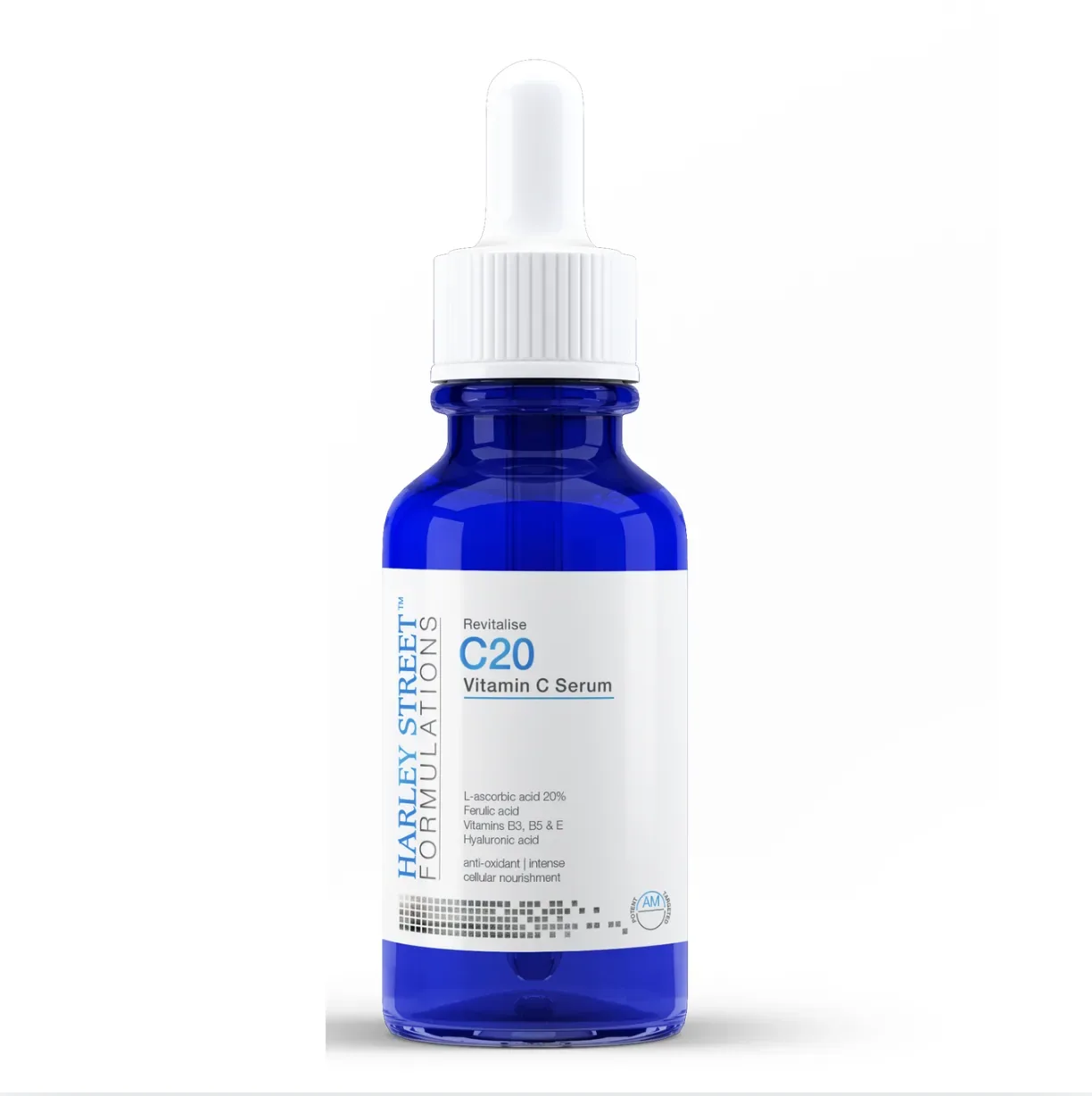
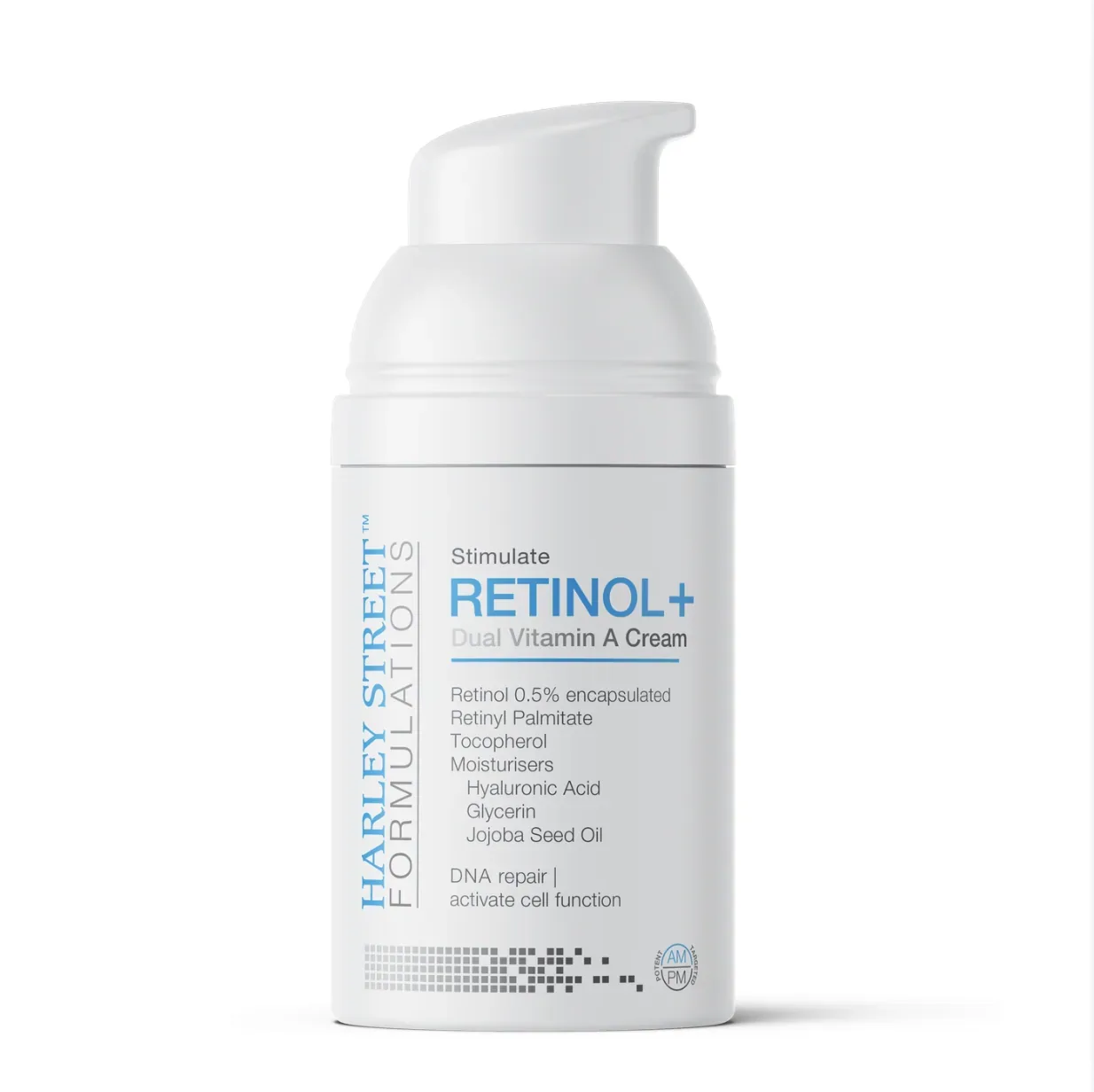
Two doctor-formulated essentials for between appointments.