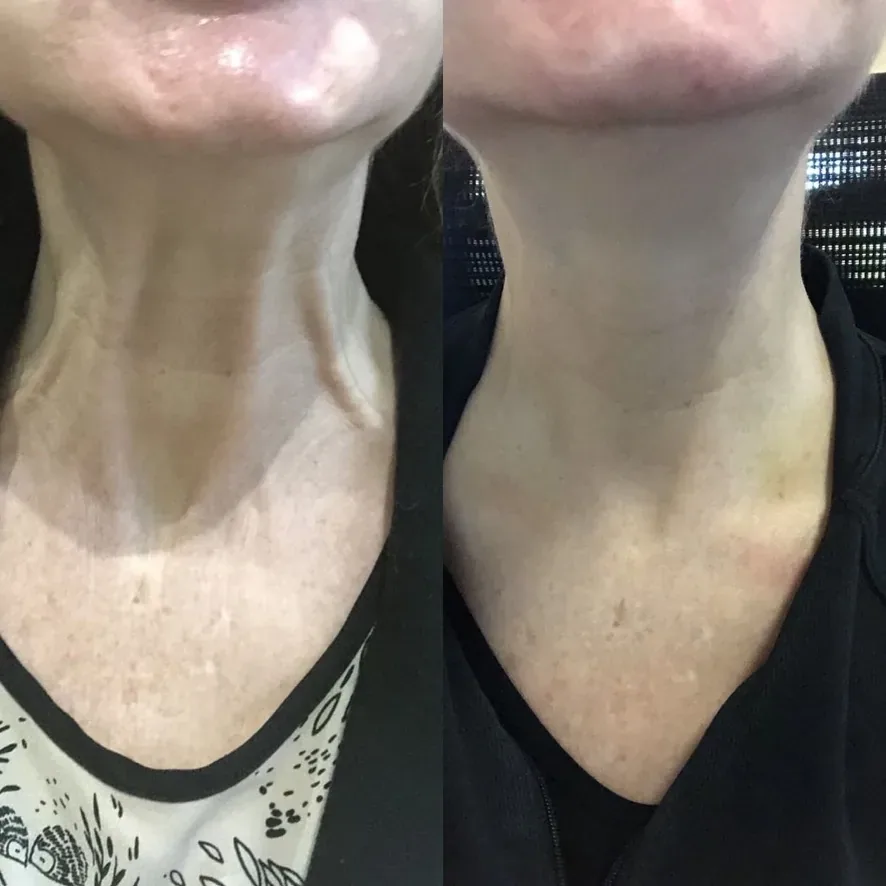
The Nefertiti Lift is the most-searched non-surgical neck-and-jaw treatment in the UK, and also the most commonly misrepresented. Named after the sculpted profile of Queen Nefertiti, the procedure was first described by Dr Philippe Levy in 2007 in Aesthetic Surgery Journal, and uses precisely targeted botulinum toxin type-A injections along the inferior border of the mandible and into the upper fibres of the platysma to release the downward pull of that muscle on the lower face. The brief is simple: silence the depressor, let the elevators win, and the jawline reads sharper while the vertical neck cords soften. At Cosmedocs in London — a doctor-led Harley Street clinic that has performed over one million injections since 2007 — we treat the Nefertiti Lift as a careful piece of anatomy, not a marketing line.
Why the platysma matters: anatomy in plain English
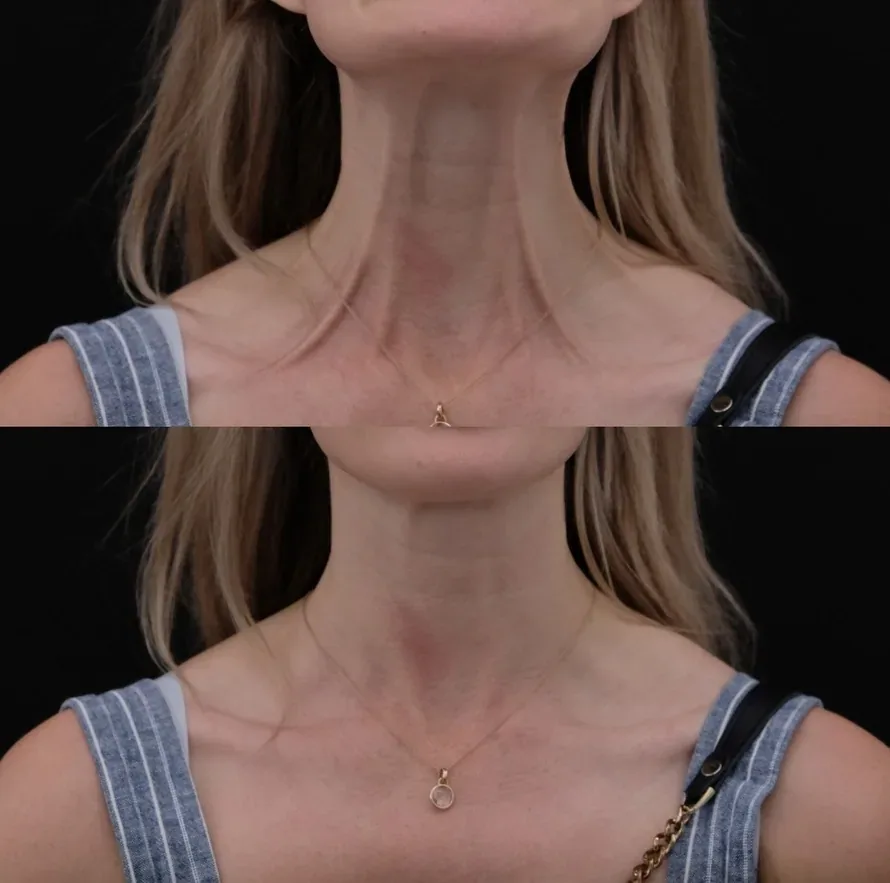
The platysma is a broad, thin sheet of muscle that runs from the upper chest and clavicle, fans up over the front of the neck and inserts into the lower border of the mandible, the modiolus and the lower face. With age, repeated activation, weight change or genetic predominance, its medial fibres can hypertrophy into two visible vertical bands — the platysmal cords you see standing out in our before-and-after image above. When the platysma over-contracts it also pulls the corners of the mouth and jawline down (a "down-pulling muscle"), erodes the cervico-mental angle and blunts what surgeons call the mandibular border. Botox injected at multiple low-dose points along the cord and at the marginal mandibular trajectory chemically denervates those fibres for 12–16 weeks, lifting the jawline by subtraction rather than addition.
What our before-and-after image actually shows
The two-panel image at the top of this page is a real Cosmedocs patient photographed before and approximately four weeks after a single Nefertiti session. The upper panel shows two strong vertical platysmal cords descending from the angle of the mandible to the sternal notch, with shadowing across the supraclavicular hollow. In the lower panel the cords are visibly softer, the medial neck reads smoother, and the décolletage no longer pulls the eye away from the face. Crucially the patient still moves naturally — this is platysmal relaxation, not paralysis. That distinction is the entire art of the Nefertiti Lift.
Technique: how Cosmedocs delivers a Nefertiti Lift
We use 15–30 units of premium FDA- and MHRA-approved botulinum toxin (most commonly Botox® / Vistabel®, occasionally Bocouture® or Azzalure® on patient request) delivered through ultra-fine 32G needles. Injection points include 4–6 micro-doses along each visible platysmal cord, 5–7 points along the inferior mandibular border roughly 1 cm below the jaw, and conservative dosing into the depressor anguli oris where the corners of the mouth are being pulled down. Depth is intentionally superficial — sub-dermal to intra-muscular — to avoid diffusion into the deep cervical strap muscles, which is the safety boundary every responsible practitioner respects.
The session takes 15–20 minutes, requires no anaesthesia beyond optional topical cream, and produces no meaningful downtime. Onset is visible at day 3–5 and peaks by day 14. We see patients back at two weeks to fine-tune any asymmetry at no extra charge. Results last 3–4 months on a first treatment and typically extend to 4–6 months once the platysma has been retrained over two or three cycles, which is consistent with published clinical data in Aesthetic Surgery Journal and PMC-indexed dermatology literature.
Who is — and isn't — a candidate
The Nefertiti Lift works best on patients with dynamic platysmal cords and an early loss of jawline definition, typically from the mid-thirties onwards. It is excellent for the patient who looks fine at rest but whose neck cords "jump" on talking, smiling or looking down at a phone. It is also strong as a maintenance step for patients who have previously had a deep-plane facelift or thread lift and want to keep the neck quiet between surgical refreshes.
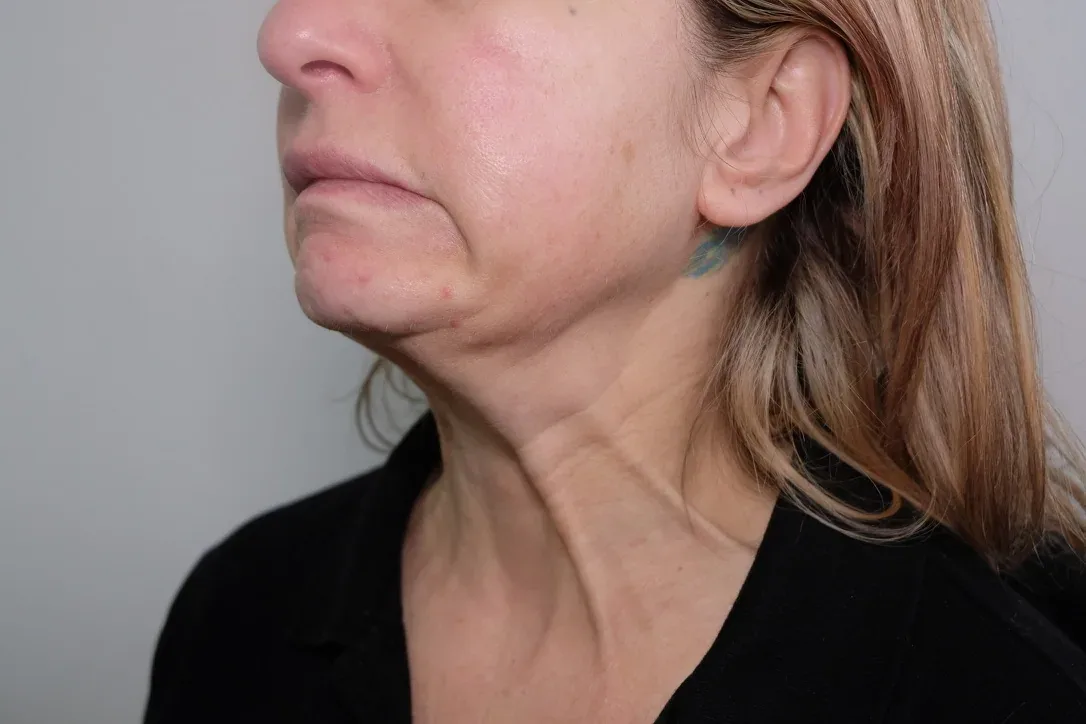
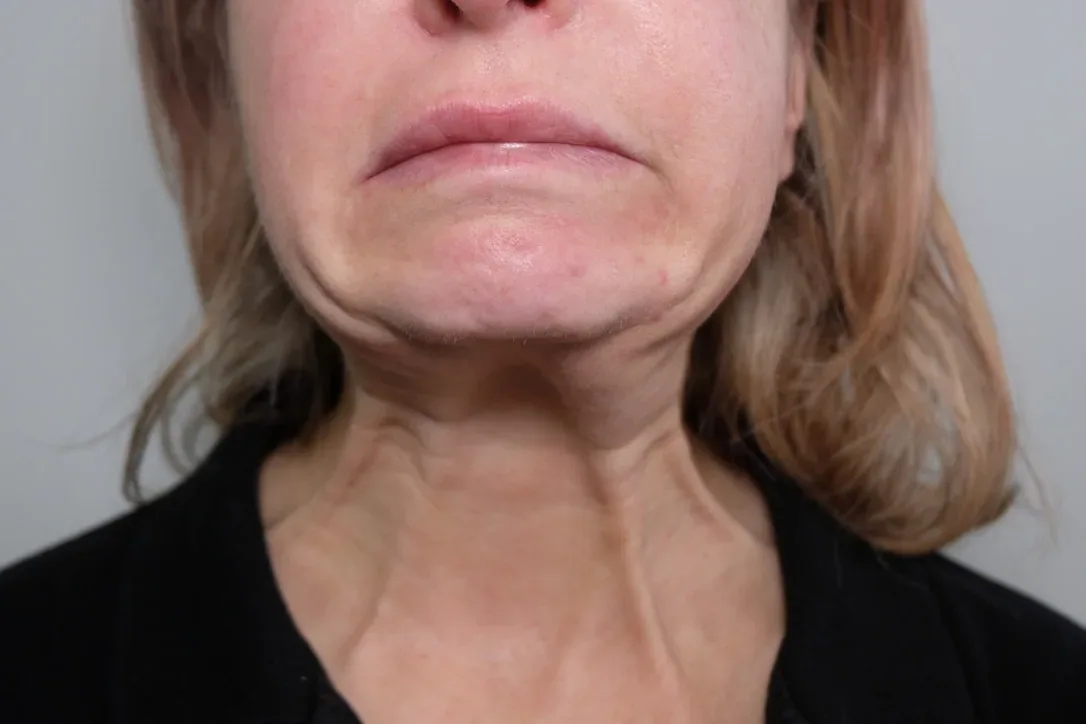
It is the wrong tool — and we will tell you so — for heavy submental fat, true skin redundancy ("crepe" skin with no muscle component), advanced jowling driven by bone resorption, or grade III–IV platysmal banding on the Pitanguy classification where the cord persists at rest. Those patients are better served by combination plans involving Profhilo bio-remodelling, polynucleotides, an Endolaser fibre lift, deoxycholic-acid fat dissolving, or, beyond a certain threshold, surgical platysmaplasty performed at our affiliated hospitals.
How Cosmedocs compares to other London Nefertiti providers
Search "Nefertiti Lift London" and you will see the same handful of clinics: large chain providers in Marylebone, single-practitioner nurse-led clinics across Mayfair and Chelsea, and a smaller number of doctor-led Harley Street practices. We have audited the public-facing pages of those providers and three patterns stand out.
First, pricing in London ranges from £250 to £650 for a Nefertiti Lift, with the lower end almost universally driven by trainee nurse injectors and the upper end by surgeon-led aesthetic clinics. Our £300 fee deliberately sits inside the doctor-led band without inflating to brand-premium pricing — the patient is paying for the practitioner, not the postcode.
Second, almost no competitor publishes a real photograph of platysmal cord reduction; most rely on stock images, computer renderings or one-sided "after-only" photography. Our editorial standard is the opposite: every Nefertiti image on this page is a real Cosmedocs patient with documented consent, lit on the same black backdrop in the same neutral pose, with no software smoothing. This matters because the Nefertiti Lift is a treatment whose success is judged in millimetres of band relief, not in dramatic Instagram filters.
Third, competitors frequently conflate the Nefertiti Lift with masseter Botox for jaw slimming, a different anatomical target. Cosmedocs maintains separate pages for each — see our Masseter Botox / jaw slimming and all Botox indications — and we routinely combine the two when a patient presents with both bruxism-driven jaw width and platysmal cord visibility. The honest answer is that the two treatments solve adjacent problems and should not be marketed as interchangeable.
The Nefertiti Lift vs surgical alternatives
Patients often arrive having priced a deep-plane facelift, a MACS lift or a submental platysmaplasty between £8,000 and £25,000 in central London. The Nefertiti Lift is not a surgical equivalent. What it does well is buy a patient five to ten years of meaningful neck and jaw quietness before — or instead of — committing to surgery, particularly when paired with regenerative skin work such as Profhilo or Polynucleotides on the neck, or with a non-invasive Laser Fibre Lift for skin tightening at the same anatomical zone. For a structured overview of the entire spectrum, see our non-surgical facelift hub.
Safety, evidence base and the boundaries of good practice
The Nefertiti Lift is supported by a now-substantial evidence base. Levy's original cohort, subsequent Aesthetic Surgery Journal series and PMC-indexed clinical reviews report high patient-satisfaction scores, durable cord softening at four months, and a very low rate of adverse events when injection depth and dosing are respected. The two complications worth naming honestly are transient dysphagia if toxin diffuses into the deeper neck strap muscles, and asymmetric smile if marginal mandibular branch territory is over-dosed. Both are dose- and technique-dependent and both resolve as the toxin wears off. At Cosmedocs every Nefertiti Lift is performed by a GMC-registered doctor trained at the Harley Street Institute — never delegated to a non-medical injector — because the margin for error along the marginal mandibular nerve is the entire reason this treatment is considered an advanced indication.
What recovery actually looks like
Most patients return to work the same hour. We ask you to avoid lying flat, vigorous exercise, hot yoga, saunas and facial massage for 24 hours, and to keep the head upright while the toxin binds. Minor pinpoint bruising can occur along the platysma and resolves in 3–5 days; mineral concealer is fine immediately. There is no swelling pattern that would be obvious to a colleague at lunch the next day, which is precisely why the Nefertiti Lift has become the preferred pre-event treatment for clients in front of cameras and boardrooms.
Pricing, packages and the honest economics
A standalone Nefertiti Lift at Cosmedocs is £300, including consultation, treatment and a two-week review. When combined with upper-face Botox (forehead, frown and crow's feet) in the same session, the Nefertiti element is offered at a reduced add-on rate of £50 in line with our published Botox pricing pillar. We do not run flash discounts on toxin treatments — a position we maintain for patient-safety reasons and because price competition tends to compress dosing rather than improve outcomes.
Booking and next steps
If you recognise yourself in the upper panel of our before-and-after image — strong vertical cords, a jawline that has lost its edge, a neck that no longer matches the face — a consultation is the right next step. We will photograph you under standardised lighting, classify your platysmal anatomy, and tell you honestly whether a Nefertiti Lift will deliver the result you want, whether it should be combined with regenerative or laser work, or whether surgery is the more honest recommendation. Our aesthetics is invisible art. Bold, natural, always your way.