
The chin is the most underestimated structure in the face. It doesn't get the attention of lips, the drama of cheekbones, or the Instagram-friendly angularity of the jawline. Yet change it by 3mm and the entire profile shifts. The nose looks smaller. The jawline looks sharper. The lips look better proportioned. Nothing else was touched — just the chin. That's how structural anchoring works.
But here's where it goes wrong: people confuse "more projection" with "better aesthetics," and injectors sometimes confuse chin filler with jawline contouring. They're not the same treatment. They don't address the same anatomy. And when the difference isn't understood, the lower face gets heavy — not defined.
What the Chin Actually Does in Facial Balance
The chin is the structural anchor of the lower third. It determines how the face reads in profile — how the lips relate to the nose, how the jawline transitions, whether the face looks proportional or "recessed." In aesthetic terms, the chin controls the vertical and horizontal balance of everything below the cheekbones.
A chin that sits slightly behind the lower lip line creates the impression of a weaker jaw, even when the mandible itself is perfectly normal. It can make the neck look shorter, the nose look larger, and the overall face appear bottom-heavy. None of these are real problems — they're proportional illusions created by one structure sitting a few millimetres behind where it should.
This is why small changes matter. The chin doesn't need a lot of filler. It needs the right amount in the right plane. Most chins respond to 0.5–1.5ml placed periostally — directly on bone. The effect isn't dramatic. It's architectural: everything else starts to look more balanced because the foundation was corrected.
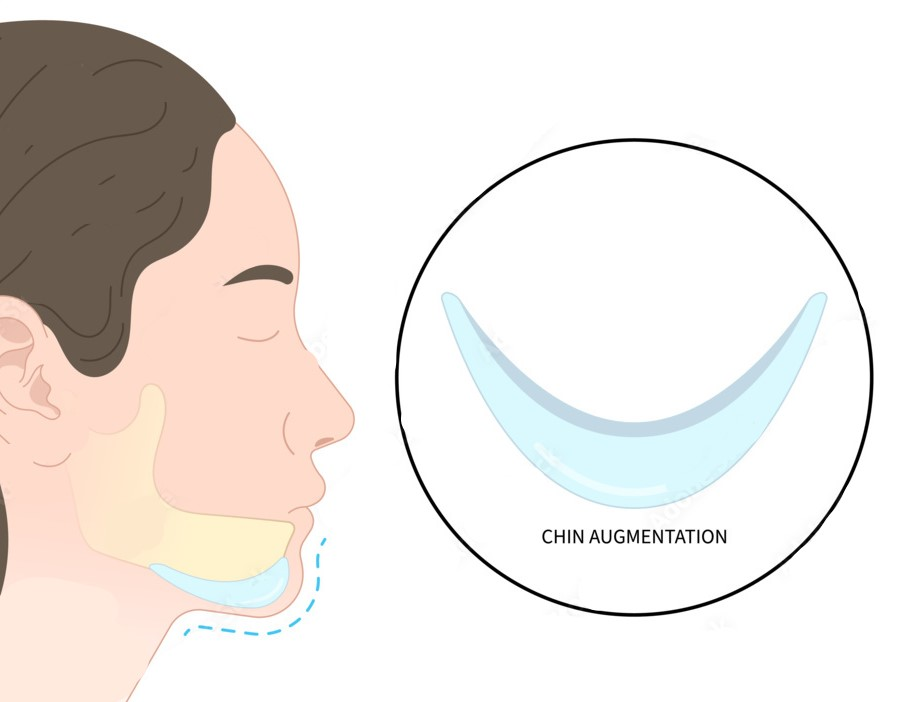

Profile Balance vs Projection: They're Not the Same Thing
This is where most overfilled chins begin — with the assumption that more forward projection equals a better profile. It doesn't. A chin that projects beyond the lower lip creates heaviness. It pulls the face forward, disrupts the lip–chin relationship, and makes the lower face look artificial from every angle except the one used for the "after" photo.
Balance means the chin sits in correct proportion to the nose and lips when viewed in profile. The classical guideline — the Ricketts E-line — places the ideal chin position slightly behind a line drawn from the tip of the nose to the chin point. That's the reference. Not "as far forward as possible."
Over-projection creates a distinctive look: the chin appears to "lead" the face, almost detached from the rest of the lower third. It reads as artificial precisely because human bone structures don't develop in isolation — they develop in proportion. When filler ignores proportion, it creates a chin that doesn't belong to that face.
Why Chin Filler Is Not Jaw Filler
This distinction matters more than most patients — and some injectors — realise. Jaw filler targets the lateral mandible: the angle, the body, the ramus. Its job is width, definition, and angularity. Chin filler targets the mentalis region: the central lower face. Its job is forward projection, vertical length, and profile harmony.
The mistake people make is treating the jawline without addressing the chin — or worse, treating the chin as if it were the jawline. Stacking filler across the entire lower face without a structural plan creates volume without definition. It's the aesthetic equivalent of adding more furniture to a room that needed better architecture.
In many cases, a well-placed chin augmentation is all the lower face needs. It can sharpen the perceived jawline without any jaw filler at all — because the chin was the structural weakness, not the mandibular angle. Understanding which treatment the face actually requires is the injector's job, not the patient's. If you're being sold both at the first visit, ask why.
Related Reading
For a detailed exploration of how chin and jaw filler interact, including masculine vs feminine jawline goals and structure vs contour.
Interpreting Chin Filler Results: What Natural Improvement Looks Like
Good chin filler results don't look like chin filler. They look like the patient's face — just slightly more balanced. The nose appears less dominant. The jawline reads as more defined. The overall profile looks proportionate without any single feature drawing attention. That's the invisible art.
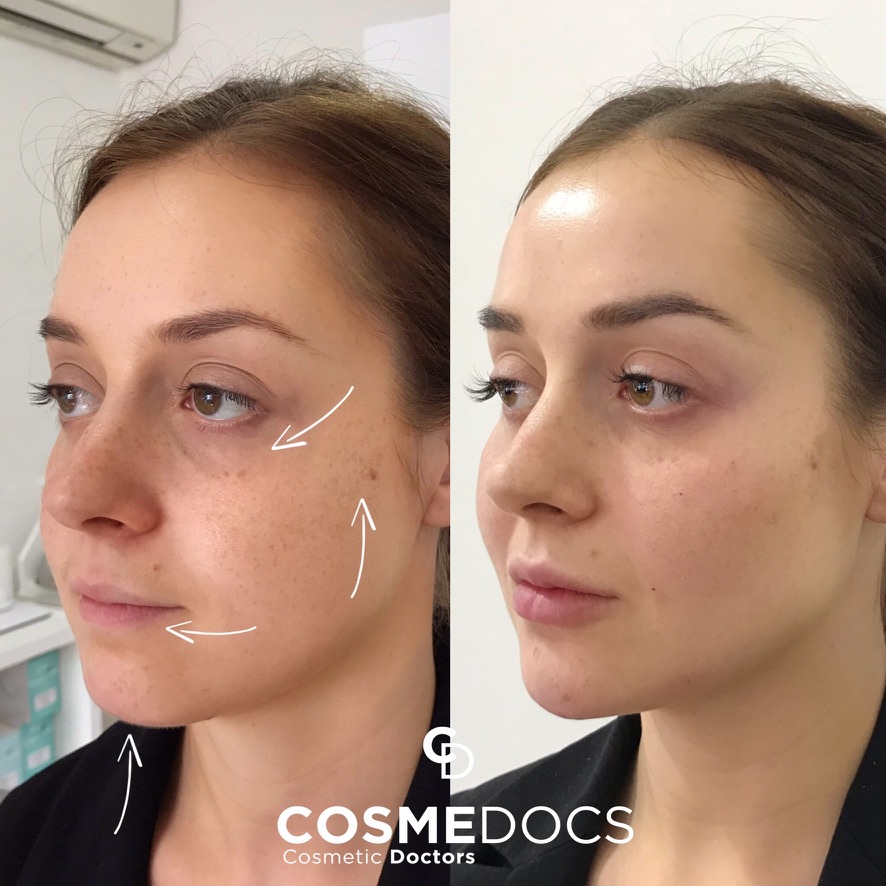
Notice what hasn't happened: the chin hasn't become a shelf. It hasn't widened. It hasn't created a "ledge" below the lower lip. What has happened is a structural correction — the kind that changes how the entire lower face reads without announcing that anything was done.
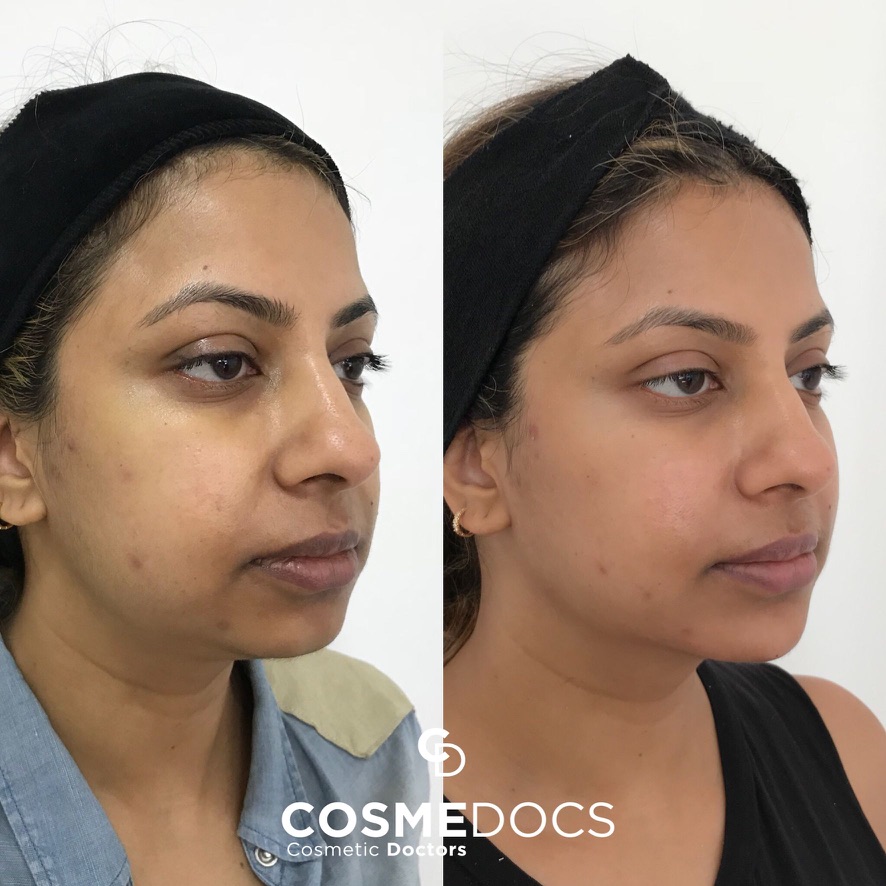
When reviewing results — your own or anyone else's — look at the profile, not the chin in isolation. Does the face read as proportional? Does the chin support the jawline transition? Does the nose–lip–chin relationship look harmonious? If yes, the treatment worked. If the chin is the first thing you notice, too much was placed.
Why Overfilled Chins Happen
Nobody walks into a clinic and requests an overfilled chin. It happens incrementally, and it happens for predictable reasons:
Trend pressure. Social media favours strong, angular lower faces. Patients bring reference images of chins that are either genetically exceptional or surgically implanted — neither achievable with 0.5ml of hyaluronic acid, and attempting it is where distortion begins.
Poor assessment. The chin is treated in isolation rather than as part of the full profile. Without assessing the nose–lip–chin axis, filler is placed to a target that doesn't exist in the patient's anatomy.
Patient-led design. When the patient decides what "looks right," the injector becomes a technician, not a clinician. The result is a chin that satisfies a momentary desire rather than serving long-term facial harmony.
Layering without planning. Top-up sessions without reassessing the baseline. Residual filler from previous treatments is rarely zero, and adding more without accounting for what's still there is how subtle over-projection becomes not-so-subtle.
The antidote to all of this is the same: a consultation-led approach where the injector assesses the full profile, explains what the anatomy supports, and — when necessary — declines to treat. That last part is the one most clinics skip, and it's the one that matters most.
Who Chin Filler Is Not Suitable For
This is the section most chin filler articles omit, which is precisely why it belongs here. Chin filler works best on patients with mild to moderate chin recession where a small structural adjustment creates meaningful profile improvement. It does not work well — or at all — for everyone.
Significant skin laxity — filler adds volume but doesn't lift. In patients with sagging skin around the chin and jowl area, filler may add bulk without improving contour.
Heavy jowling — the jowl sits lateral to the chin. Adding chin projection without addressing the jowl can create an imbalanced lower face where the chin projects but the jowls remain.
Desire for dramatic projection — if the goal is a significant chin advancement, filler has limits. Beyond approximately 4–5mm of projection, a surgical implant or sliding genioplasty may be more appropriate and more stable long-term.
Expectation mismatch — patients who bring reference images of chins that don't correspond to their facial skeleton. Filler enhances existing structure; it doesn't rebuild it.
None of this means these patients can't be treated — it means chin filler specifically may not be the right answer for them. A consultation exists to work this out. If you leave without a treatment plan, that's not a failure. That's the system working correctly.
Longevity & Maintenance: What to Realistically Expect
Chin filler generally lasts between 12 and 18 months, though this varies depending on the product, individual metabolism, and depth of placement. The chin is a relatively stable area — less muscular movement than the lips, less expression-driven breakdown than the forehead — so results tend to persist longer than in more dynamic regions.
That said, filler is not permanent, and any claim otherwise should be treated with appropriate scepticism. Maintenance appointments allow for reassessment — not just top-up. The face changes, weight fluctuates, bone resorbs over time. A good maintenance plan accounts for all of this, not just "do you want more?"
Visual Evidence
For a comprehensive collection of clinical photographs, visit our chin filler before and after results.
For patients who want to explore chin filler as a treatment option, you can find further details on our chin filler treatment page.
Frequently Asked Questions
What is the difference between chin filler and jaw filler?
Chin filler addresses the central lower face — forward projection, profile balance, and the chin–lip relationship. Jaw filler targets the lateral mandible for width, definition, and angle. They serve different structural goals and are not interchangeable.
Why do some chin fillers look overdone?
Over-projection happens when filler is placed without considering the full facial profile. Trend pressure, superficial placement, and layering without reassessing residual volume are the most common causes.
How long does chin filler last?
Generally 12 to 18 months, though this varies by individual metabolism, product choice, and placement depth. The chin is a relatively stable area, so results may persist longer than in more mobile regions.
Can chin filler make my nose look smaller?
Not literally, but yes perceptually. By correcting chin recession and improving profile balance, the nose occupies a more proportionate relationship with the lower face. It's not a rhinoplasty alternative, but it can change how the nose reads in profile.
About the Author
Dr Ahmed Haq is the Medical Director of CosmeDocs, practising from 10 Harley Street since 2007. He specialises in structural facial contouring, non-surgical rhinoplasty, and training physicians at the Harley Street Institute. His approach prioritises anatomical assessment over aesthetic trends — treating what the face needs, not what social media suggests.
This article reflects Dr Haq's clinical approach to chin augmentation — treating profile balance as an architectural correction, not a volume exercise. His experience managing over-projection cases informs the restraint-first philosophy outlined above.
Experience
17+ years in aesthetic medicine · 1M+ procedures since 2007
Memberships
- ·Royal College of Physicians (RCP)
- ·British Association of Cosmetic Doctors (BACD)
- ·Harley Street Institute — Faculty Trainer
Clinical Specialities