Medically reviewed by Dr Ahmed Haq, Medical Director, Cosmedocs Harley StreetGMC 6078057Last reviewed
Harley Street, London
Cosmedocs, 10 Harley Street, London W1G 9PFSpeak with the clinic
+44 20 3733 3227Medically reviewed
Dr Ahmed Haq, GMC 6078057Check the evidence
Verified reviews Real chemical peels resultsPeel To Reveal
Fusion Cocktail Peel — multi-oxidants & peeling actives
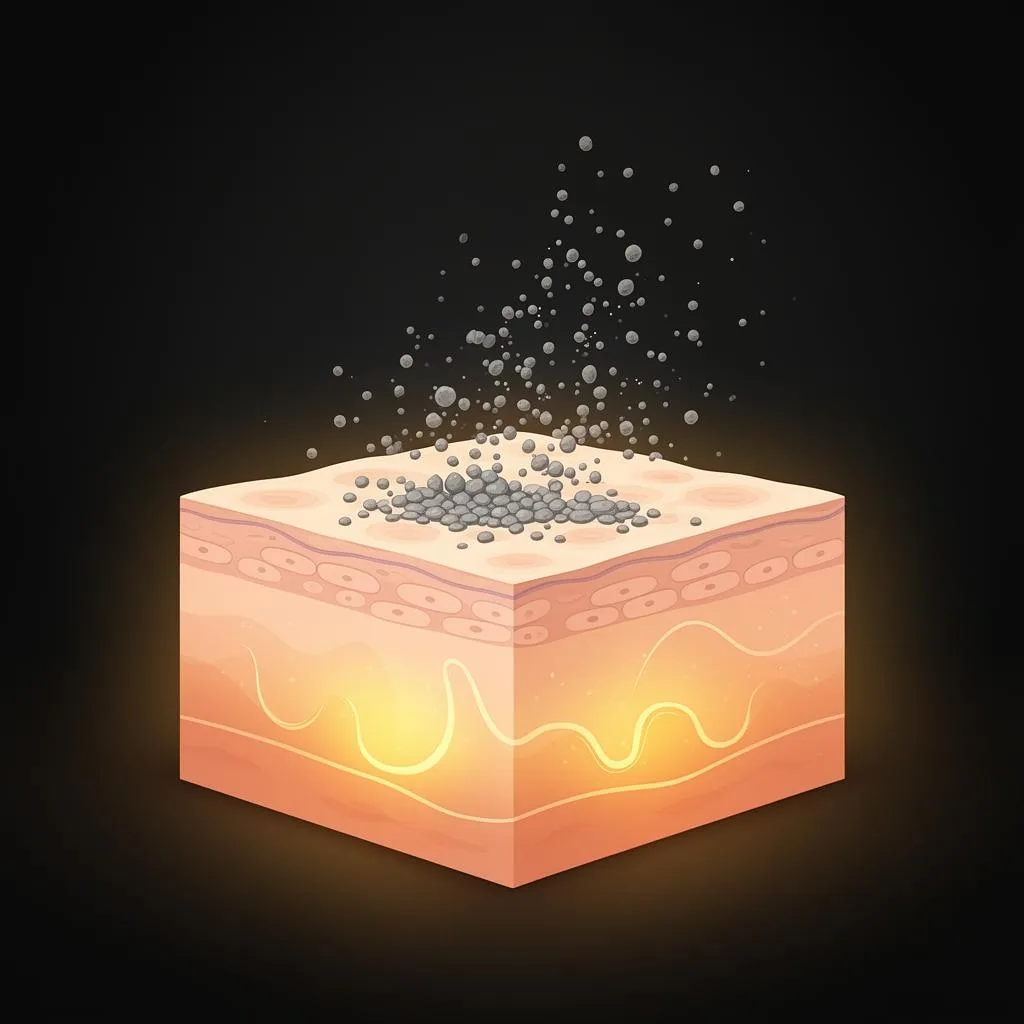
A medical facial that removes dead skin cells — the root cause of uneven texture, dull tone, and premature ageing. Fresh, clear skin revealed in one session.
Is this actually what you need?
Treat the skin concern, not the trend.
Congestion, uneven tone and sensitivity need different plans. Peel strength and timing follow skin assessment rather than a promise that stronger is better.
Best for
Selected superficial texture, congestion and pigment concerns with an appropriate peel.
Not the answer for
Lost facial support, significant laxity or inflamed skin that needs medical care first.
What Is a Chemical Peel?
A chemical peel is a controlled medical procedure that uses acid solutions to remove damaged outer skin layers, stimulate collagen production, and accelerate cellular renewal. The result is smoother texture, reduced pigmentation, diminished scarring, and a brighter, more even complexion.
At Cosmedocs Harley Street, we go beyond single-acid peels. Our clinicians combine primary peeling agents — salicylic, glycolic, lactic, and TCA acids — with supporting ingredients such as mandelic acid, azelaic acid, pyruvic acid, retinol, and clinical-grade antioxidants including glutathione, kojic acid, and vitamin C. This multi-active approach ensures each peel is precisely calibrated to your skin type, Fitzpatrick classification, and treatment goals.
4 Years of Anti-Ageing
One peel per year. Four years of results. This patient's skin has visibly reversed the signs of ageing — improved tone, refined texture, and a natural glow that speaks for itself.
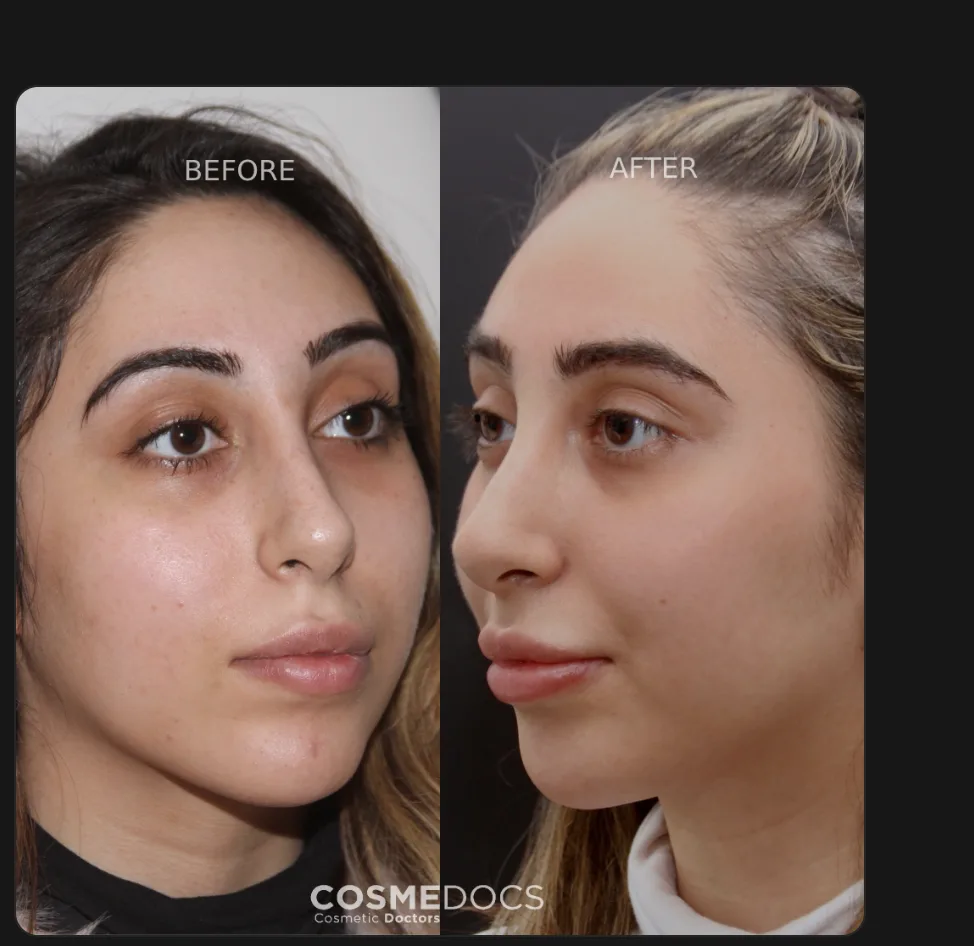
Once-a-year skin peel — 4 years of cumulative anti-ageing results
Our Skin Peels
Compare our peel types and find the right treatment for your skin concerns.
| Peel | Best For | Price |
|---|---|---|
| Salicylic Acid Peel | Acne, oily skin, blackheads, congestion | From £150 |
| Glycolic Acid Peel | Fine lines, dullness, sun damage, texture | From £100 |
| Lactic Acid Peel | Sensitive skin, hydration, mild pigmentation | From £100 |
| TCA Peel | Deep scarring, pigmentation, sun damage | From £250 |
Explore Each Peel Type
Salicylic Acid Peel
The only BHA peel — fat-soluble, penetrating deep into pores to dissolve sebum, clear acne, and reduce oiliness. Enhanced with mandelic and azelaic acid.
Learn moreGlycolic Acid Peel
The gold standard AHA with the smallest molecular size for maximum penetration. Targets fine lines, dullness, and sun damage with retinol and antioxidant support.
Learn moreLactic Acid Peel
A gentle AHA derived from milk that exfoliates whilst hydrating. Ideal for sensitive skin and mild pigmentation. Paired with azelaic acid for enhanced brightening.
Learn moreTCA Peel
Medium-to-deep peel for significant scarring, pigmentation, and sun damage. Combined with retinol pre-treatment and antioxidant recovery for optimal results.
Learn moreDon't Be Afraid
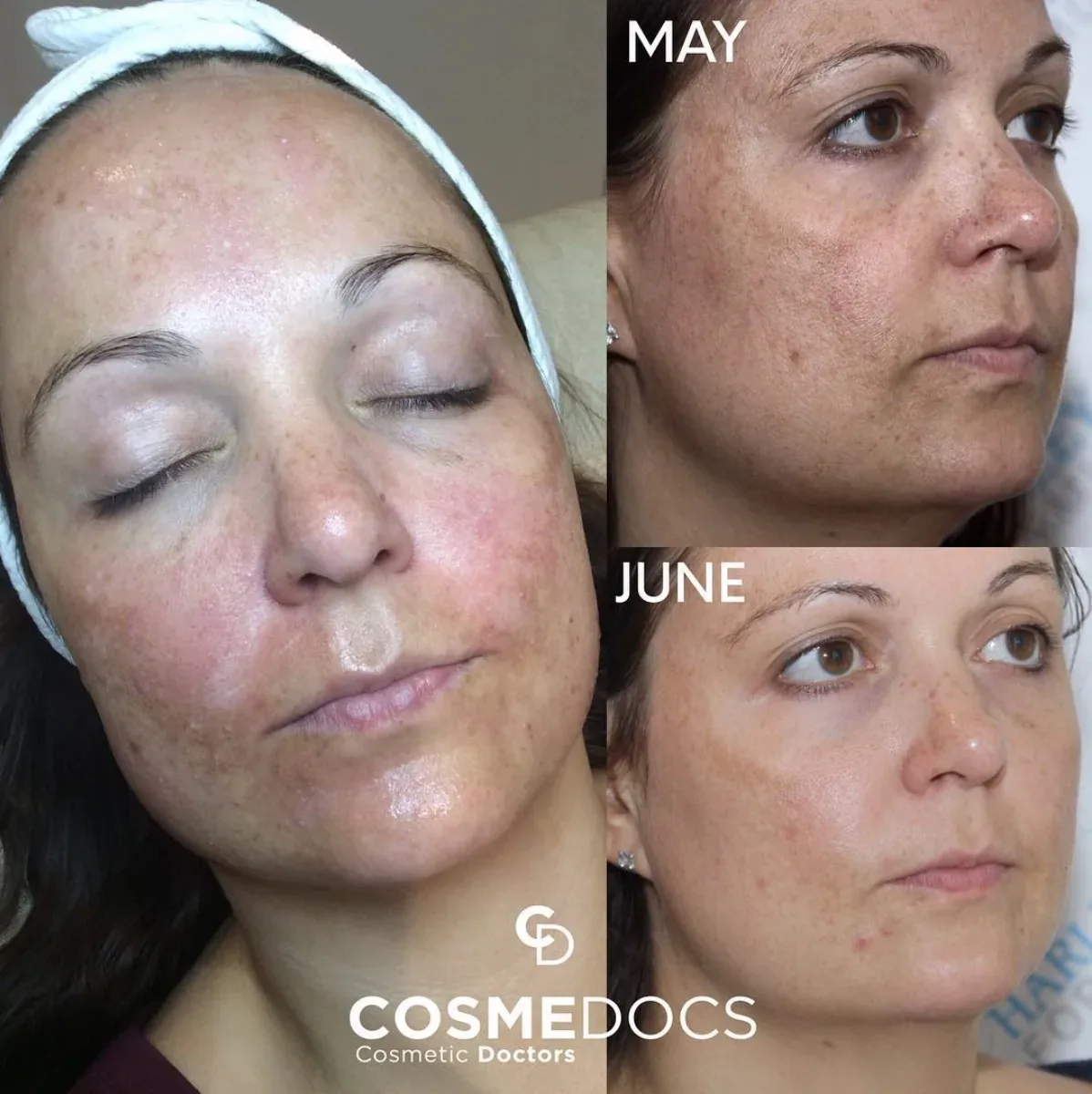
Start gently · Level 1 Medical Peel
Begin with our entry-level medical peel — a gentle, doctor-led treatment with a reassuringly simple promise.
- 10-minute treatment — fits into your lunch break.
- Visibly improved skin in 10 days — tone, clarity, and texture refreshed.
- Suitable for most skin indications — pigmentation, dullness, congestion, fine lines.
- No downtime, no flaking — you walk in, you walk out, you glow.
Real patient — Level 1 medical peel. May → June. Doctor-led at Harley Street.
Supporting Ingredients
Every Cosmedocs peel is enhanced with clinically proven supporting agents that amplify results and minimise side effects.
Mandelic Acid
Gentle exfoliation suitable for darker skin tones; anti-bacterial properties that complement salicylic and glycolic peels.
Azelaic Acid
Targets melasma, rosacea, and post-inflammatory hyperpigmentation. Anti-inflammatory and anti-microbial.
Pyruvic Acid
A keto acid that converts to lactic acid on the skin. Offers deeper penetration with sebum-regulating properties.
Retinol (Vitamin A)
Accelerates cell turnover, boosts collagen synthesis, and enhances peel efficacy when used in pre-treatment protocols.
Antioxidants (Glutathione, Vitamin C, Kojic Acid)
Neutralise free radicals, brighten skin, and protect newly revealed skin layers from oxidative stress.
The Process
Skin Assessment
Thorough consultation to determine the best peel type and strength for your skin concerns, tone, and medical history.
Pre-Treatment Preparation
Gentle cleansing and degreasing of the skin to ensure optimal and even peel penetration.
Acid Application
Careful, layered application of the chosen chemical solution — monitored for optimal timing and response.
Neutralisation & Calming
Safe neutralisation of acids followed by soothing treatments and barrier repair to calm the skin.
Aftercare Protocol
Comprehensive aftercare instructions, SPF guidance, and recommended products to maximise results and healing.
Am I Suitable?
May Be Suitable
- • Hyperpigmentation, melasma, or uneven skin tone
- • Active acne, congestion, or oily skin
- • Acne scarring or post-inflammatory marks
- • Sun-damaged or photo-aged skin
- • Fine lines, dull complexion, or rough texture
- • Enlarged pores or blackheads
May Not Be Suitable
- • Active eczema, psoriasis, or dermatitis
- • Recent isotretinoin use (within 6 months)
- • Pregnancy or breastfeeding
- • Active cold sores or bacterial skin infections
- • Recent sun exposure, sunburn, or laser treatment
- • History of keloid scarring (for deeper peels)
Before & After
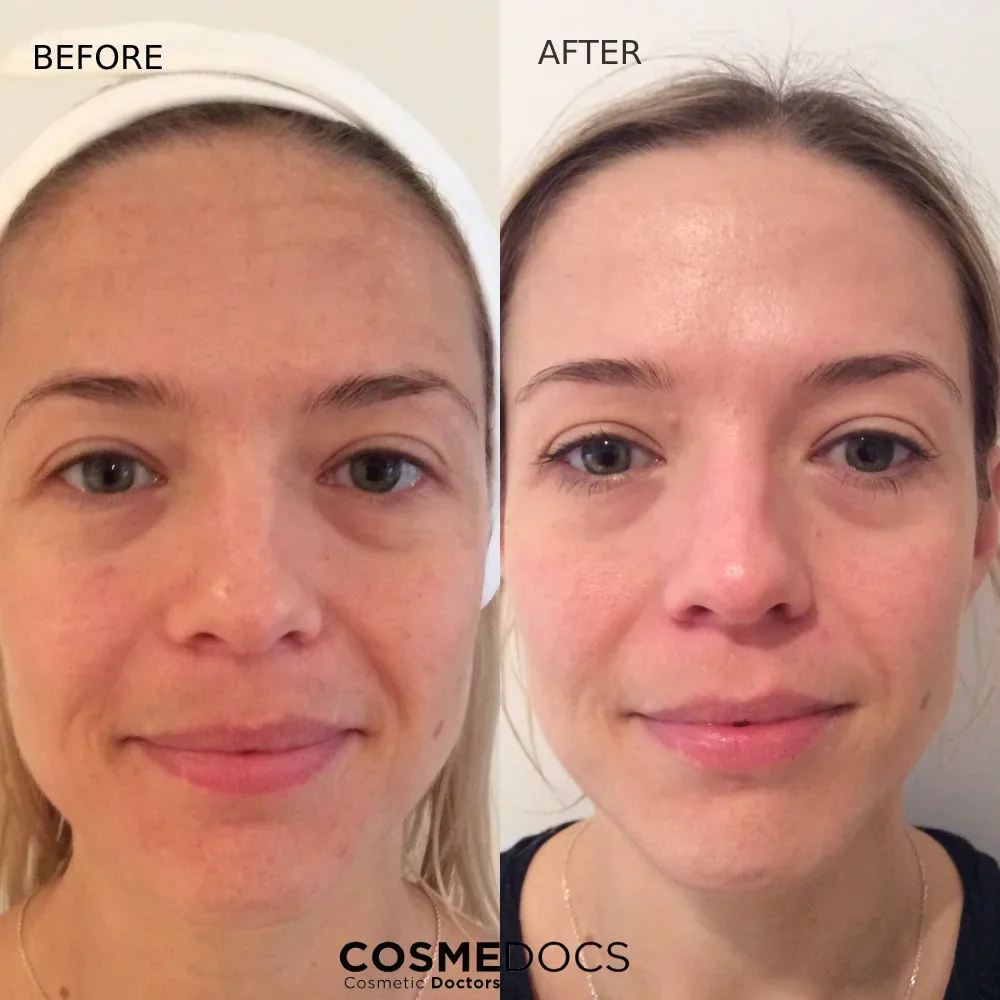
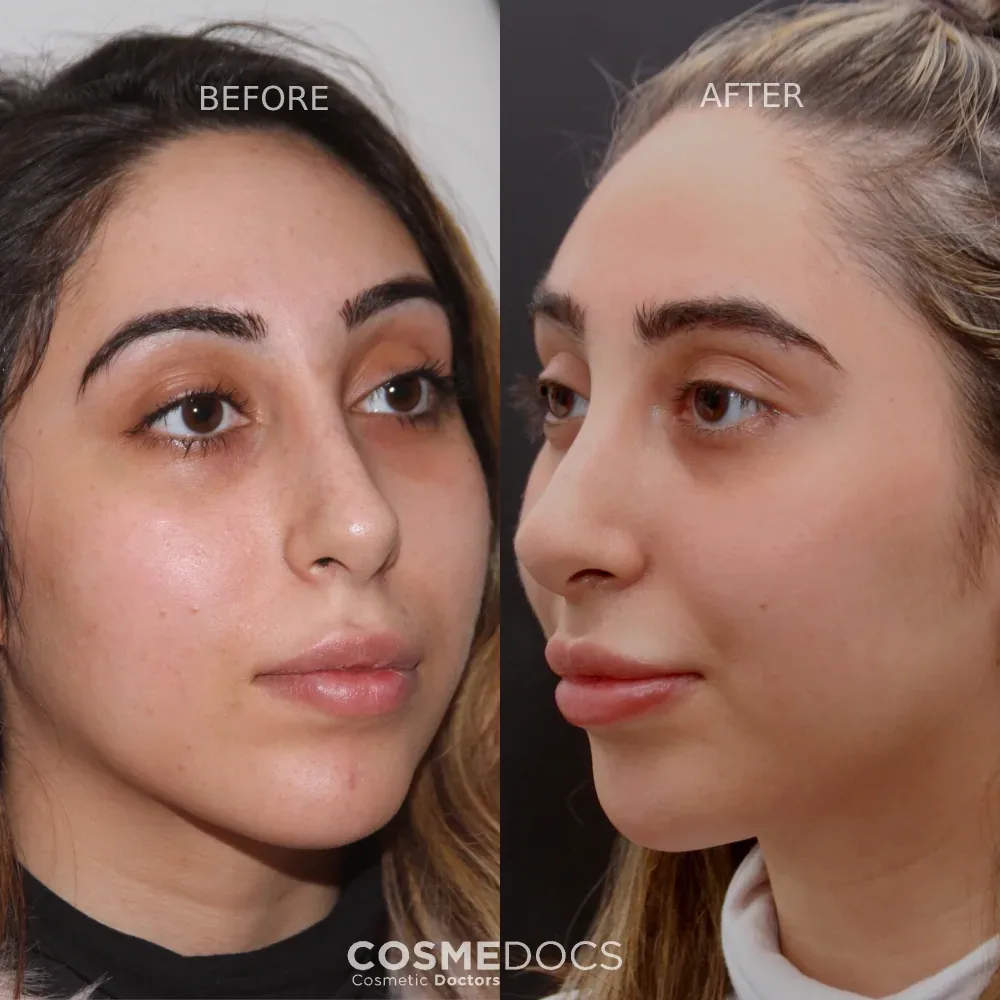
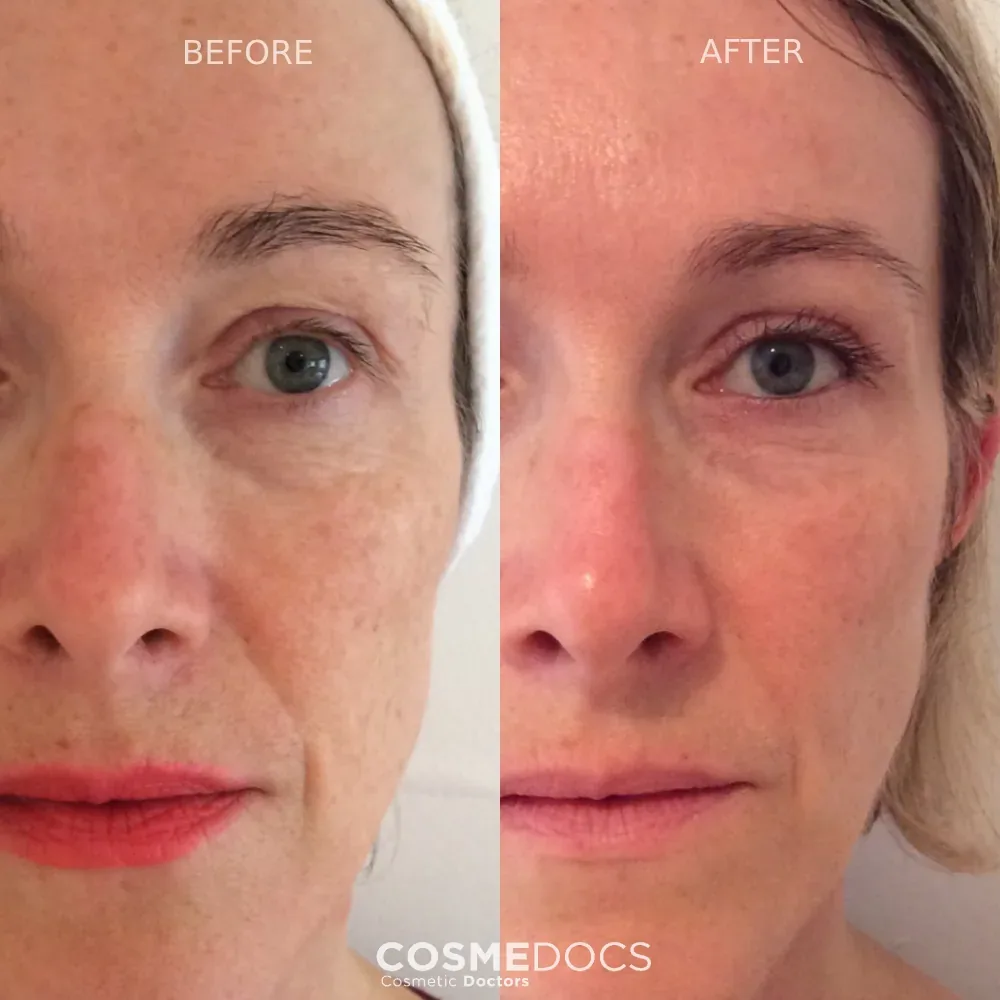
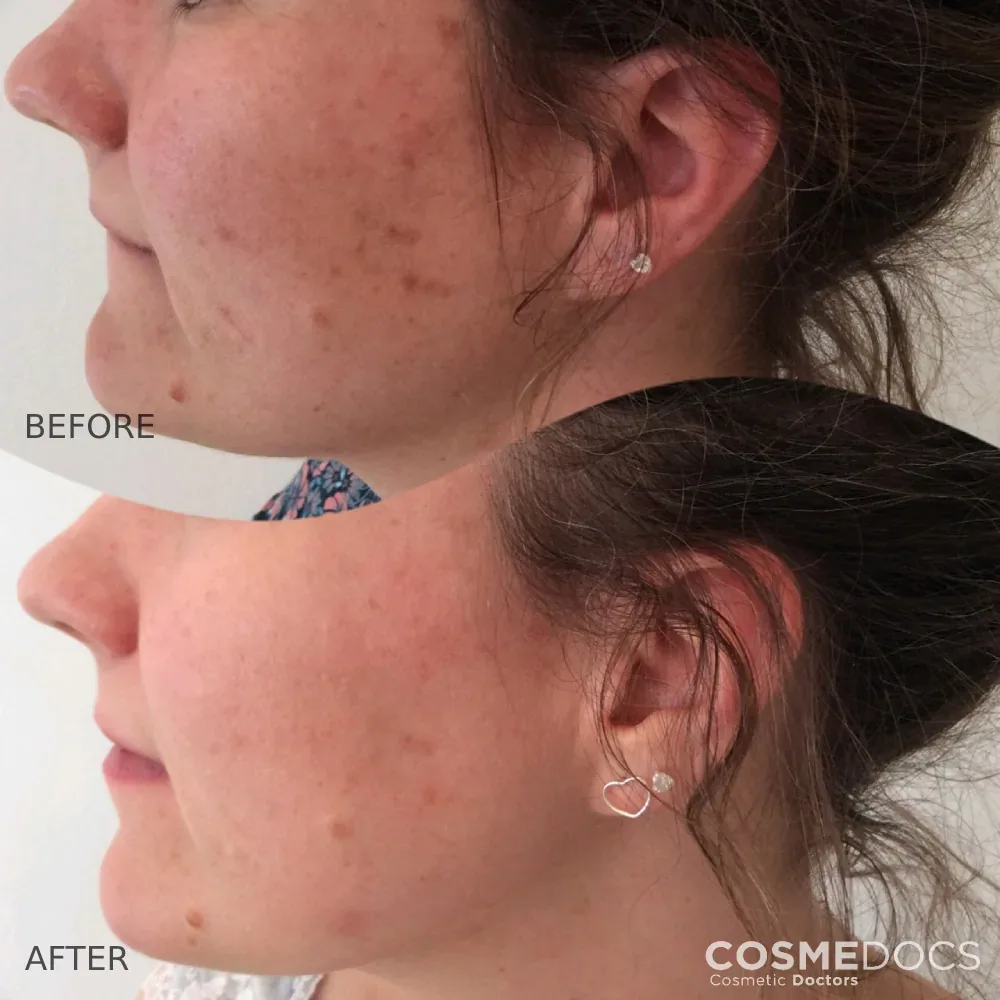
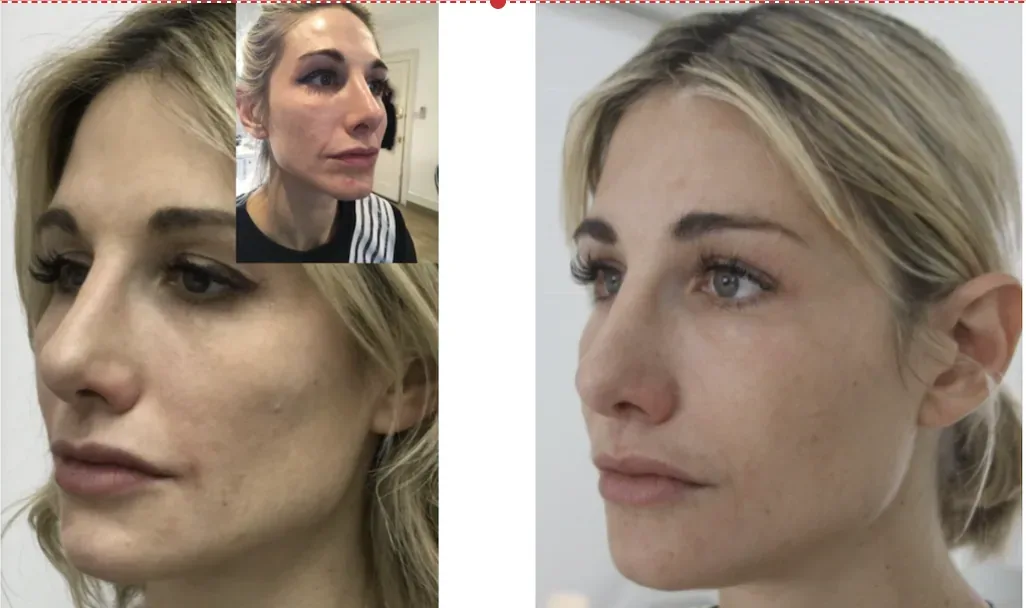
Combination case · Peel + Volume Replacement
This patient received a medical chemical peel to refresh skin clarity and texture, alongside hyaluronic acid dermal fillers for volume replacement to the cheeks and nose. The skin is treated; the structural volume loss is restored — the two work together.
Real Cosmedocs patient, published with consent. Individual results vary.
Individual results vary. Images show real Cosmedocs patients treated at our Harley Street clinic, published with patient consent.
Clinical Standards
All chemical peels at Cosmedocs are performed by qualified medical practitioners with extensive training in dermatological procedures. Our Harley Street clinic adheres to CQC-equivalent clinical standards, and every treatment is preceded by a thorough skin assessment including Fitzpatrick skin typing and medical history review.
We use only medical-grade, pharmaceutical-quality peeling agents sourced from certified suppliers. Concentrations and pH levels are precisely calibrated — not off-the-shelf formulations. Our practitioners hold postgraduate qualifications in aesthetic medicine and attend regular continuing professional development in chemical exfoliation techniques.
Patient safety is paramount. Pre-treatment patch testing is available for sensitive individuals, and detailed written aftercare protocols are provided at every appointment. Our outcomes are documented with standardised clinical photography for objective progress tracking.
Frequently Asked Questions
At a Glance
Duration
20–45 minutes
Course
3–6 sessions
Recovery
1–7 days peeling
Types
Light, medium, deep
Treatment Pricing
Includes skin assessment
Natasha W.
"After three chemical peels my pigmentation has faded dramatically. My skin is the clearest it's been in years. Worth every session."
More real experiencesDaily Skincare
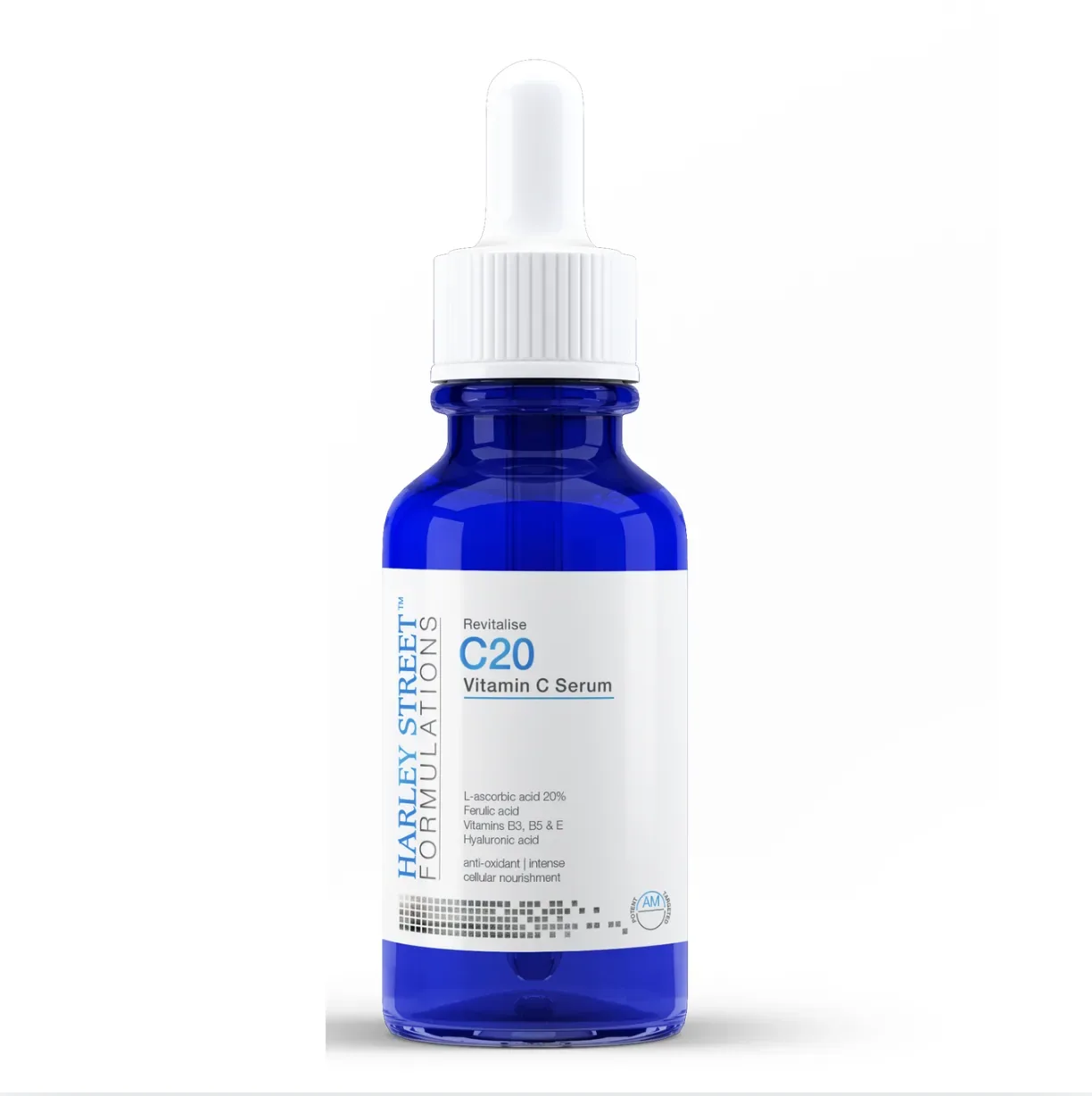
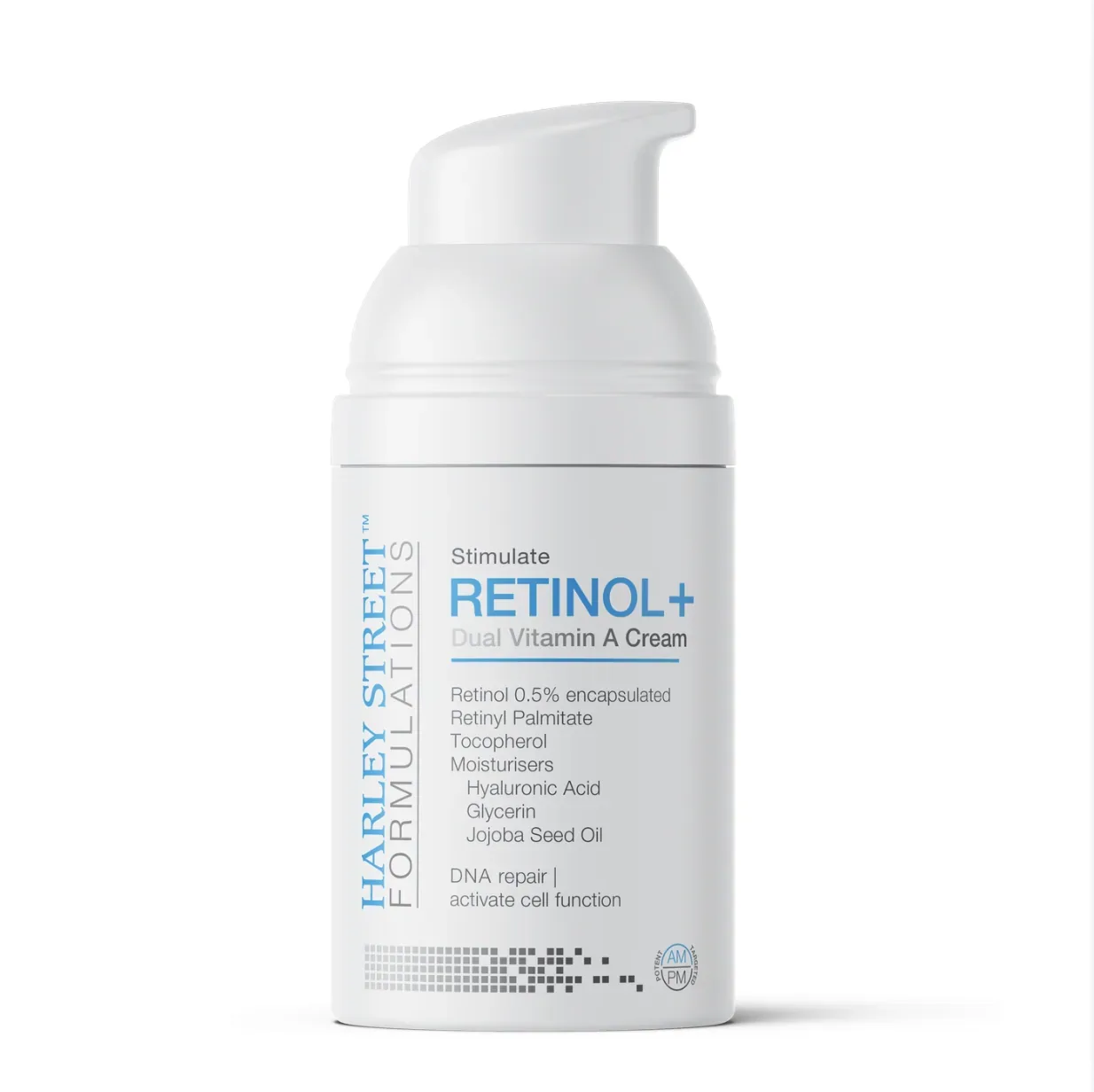
Calmer, clearer skin in two steps
A morning serum and an evening cream — designed to restore balance.
Flexible payment options available
Chemical Peels at Harley Street — What You Need to Know
Chemical peels are one of the oldest and most evidence-based skin rejuvenation treatments in dermatology. The principle is straightforward: a controlled acid solution is applied to remove the outer damaged layers of skin, triggering the body's natural healing response and stimulating new collagen and elastin production.
At Cosmedocs, we classify peels by their primary active ingredient and penetration depth. Alpha hydroxy acids (AHAs) such as glycolic and lactic acid are water-soluble and work on the skin surface to improve texture, tone, and hydration. Beta hydroxy acids (BHAs) like salicylic acid are lipophilic — fat-soluble — allowing them to penetrate into the pore lining and dissolve sebum plugs, making them the treatment of choice for acne-prone and oily skin.
Trichloroacetic acid (TCA) peels operate at a medium-to-deep level, restructuring the dermal matrix and addressing more significant concerns such as deep acne scarring, photo-ageing, and resistant hyperpigmentation. TCA peels require longer recovery but deliver more dramatic results.
What distinguishes Cosmedocs is our multi-active approach. No peel is performed in isolation. We augment every primary acid with supporting ingredients — mandelic acid for gentle exfoliation suitable for Fitzpatrick IV–VI skin types, azelaic acid for its anti-inflammatory and anti-melanogenic properties, pyruvic acid for enhanced penetration and sebum regulation, retinol for accelerated cell turnover, and antioxidants including glutathione, kojic acid, and vitamin C for free radical protection and skin brightening.
Matching the Peel to the Concern
Acne & congestion
Salicylic acid (BHA)
Fat-soluble, so it works inside the pore to clear sebum plugs and calm inflammation. Usually four to six sessions, two to four weeks apart.
Dullness, fine lines, sun damage
Glycolic acid (AHA)
The smallest AHA molecule, so it penetrates most evenly and is the strongest general resurfacer. Concentrations are stepped up across a course.
Dry, sensitive or darker skin
Lactic acid (AHA)
A larger, gentler molecule that hydrates as it exfoliates, with a lower risk of post-inflammatory pigmentation in Fitzpatrick IV–VI skin.
Scarring & deeper photo-ageing
TCA
Medium-to-deep restructuring of the dermal matrix for resistant pigmentation and textured scarring. Fewer sessions, longer recovery.
What Happens Across a Course
Skin is prepared for two to four weeks before a medium peel, usually with a retinoid and pigment-inhibiting agents, so the acid penetrates evenly and melanocytes are less reactive. The first session is deliberately conservative — the concentration and contact time are calibrated to how your skin responds, not to a fixed protocol. Over the following days the surface sheds, subtly with light peels and visibly with medium ones.
Improvement is cumulative. Clarity and glow are often noticeable after one session, while pigmentation and scarring change over a course of four to six sessions spaced two to four weeks apart. Daily broad-spectrum SPF throughout is not optional: fresh skin that is left unprotected in the weeks after a peel is how pigmentation returns darker than it started.
Our signature Peel to Reveal treatment represents the culmination of this philosophy — a customisable cocktail of multiple peeling agents, adjusted by the clinician to address your unique combination of concerns in a single session. This is invisible art: transformation that speaks without saying a word. Bold, natural, always your way.